


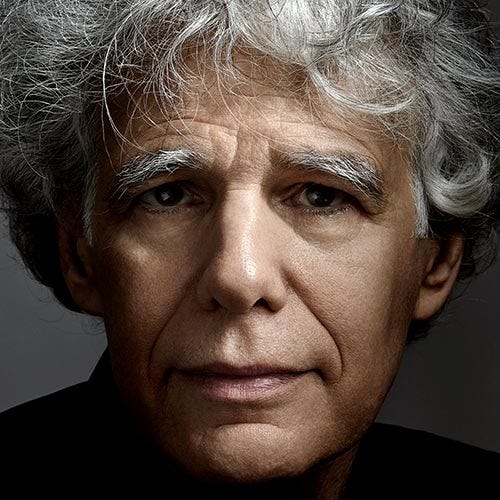
For 40 years, Thomas Hauser has been one of boxing’s great writers.
A winner of dozens of awards, author of many books and, not least, Muhammad Ali’s official biographer, Hauser has chronicled the fights, the fighters and the business of boxing with real vigour and without fear.
His recent pieces on the heinous BoxRaw/Riyadh Season sparring club shows, the Ali Revival Act and the ill-fated Times Square event in 2025 have highlighted the gap between Hauser and the rest of those covering the sport.
His contributions to boxing are likely unmatched, and that is not hyperbole. Of course, he is in the International Boxing Hall of Fame.
There is a great quote about Thomas and – to paraphrase – the gist of it is, “Oh God, Thomas Hauser is writing about me,” said in a way that conveys honour and privilege. The other quote is, “Oh God, Thomas Hauser is writing about me,” said in a way that speaks of alarm and fear.
“Boxing is a great writer’s sport,” Hauser told me on a recent visit to London. “And you know that because you’ve made it the centerpiece of your professional life. But my interests go beyond boxing. The first book I wrote was Missing, which was then made into the feature film with Jack Lemon. I’ve written non-fiction about race relations. I wrote a philosophy on moral values book about Chernobyl. The Charles Dickens and Mark Twain books led me into that world. I wrote a book called The Beethoven Conspiracy, which is a thriller about the search for a lost Beethoven conspiracy.
“And really the reason I did that was I realised all the music I was listening to was from the 1960s and earlier, which was my time for growing up. And I missed the infusion of new music into my life. And I said, ‘Well, Beethoven’s been around for hundreds of years and if I understood him and his music, maybe I’d appreciate it. And what better way to learn about something than to write about it?’”
But boxing, with both its endearing qualities and malevolent politics, continues to entice Hauser.

(Hauser, far right, and the author, left, collect their plaques at this year’s BWAA awards ceremony in New York)
“Boxing is ever-changing,” he says. “There’s this ever-changing cast of characters.
“And it’s something I keep coming back to, partly socially, because a big part of my social life revolves around people I’ve met in boxing. It’s something I’m good at. And you like to keep your finger in something like that. I like boxing people, and I like being one of them. It’s an honour to be part of boxing. And again, as I’ve said many times, some of the best people I’ve met in my life were in boxing, many of the worst people I’ve met in my life were in boxing. But I enjoy the exchange. And I feel privileged to have spent as much time as I have in boxing.
“The most obvious example of that being the years I spent with Muhammad Ali. I will never have a professional project that brings me as much joy as the time I spent with Muhammad, working with him, writing about him, because that was a very special experience with a special man.”
Hauser is an attorney by trade, but he started writing in 1977.
In 1983, he peeked behind the curtain of the boxing business when he wrote The Black Lights, documenting the story of Billy Costello while exploring what life was like in boxing’s gyms, boardrooms and, of course, prize rings. Hauser saw it all, from the underbelly to the bright lights.
The sport was a different world then, and while boxing remains easy to infiltrate, back then the doors were open wider still.
By Hauser’s own admission, he couldn’t walk into a Yankees training session. He couldn’t get into the Knicks locker room. But he could go to Gleason’s and speak to world champions.
While you can still go to Brooklyn and get into Gleason’s without an eyebrow being raised, much has changed, not least how the sport is covered.
Back then, the major newspapers in the UK and the US had dedicated boxing scribes – and they were some of the finest sportswriters in the world.
The big fighters were big news in pop culture, not merely retained in social media silos, and boxing was a TV staple.
While boxing boasts incredibly impressive online analytics today, it is not the same, and Hauser has witnessed that and agrees with the statement.
“I do,” he continues. “You write complete articles, not just books. I read you regularly, and you write full, complete, in-depth articles. But there’s so much clickbait out there. I’ll have people tell me, ‘Oh, I wrote 600 articles last year.’
“No, you couldn’t write 600 articles. You might have posted on social media 600 times or put up two-paragraph regurgitations of press releases. But it’s not real, in-depth, thoughtful writing.
“And we need more people telling the stories the way they are, not posturing, not from the point of view of shilling, but talking about it honestly. Years and years ago, a fan sent me an email, and he said, ‘I’m in marketing and one of the things I’ve learned in marketing is I can sell perfume that smells bad. I can sell a shirt that’s ugly. I cannot sell bad sports because sports fans know whether or not they’re being entertained.’ And too often, boxing fans are not entertained.
“If there’s a fight, they turn on the TV, and they see one-sided A-side versus B-side undercard fights. They see a boring main event where they know in advance who’s going to win. Very often, it comes on at a ridiculous time. In the United States, when you have a major pay-per-view event, the main event goes on sometimes around midnight. Can you imagine the National Football League or NBA putting on a flagship event that starts at midnight? It’s quite possible that if you people in the UK want to see Fury-Joshua, if it happens, you’ll have to wait till four o’clock in the morning to watch it. I mean, this is not how you build a fan following.
“In the United States, I don’t even know half the time when the fight I want to watch starts because they’ll tell you that the telecast starts at 8pm Eastern time, but they don’t tell you when the main event fighters are going to walk to the ring. And if they do tell you, sometimes they’re off by 45 minutes. No sport holds its middle finger up to its fans as often as boxing does.
“It does not treat the fans well. If you go to a fight in the United States, you might watch a fight, it lasts a round, then you have 45 minutes of downtime and then there’s another fight, and then there’s more downtime. And boxing is a great sport. I feel, and I’ve said it, that boxing at its best is the greatest sport in the world. But I’d like to see the people who run the sport be a little more solicitous of the fans in a genuine way. You know, don’t say, ‘We’re doing this for the fans,’ and then screw the fans.
“Really give the fans what they want. Now, the National Football League in the United States does that in a very real way when they televise football. The [soccer] World Cup did that. The on-site fan experience was pretty exploitative. There were a lot of problems that I had with the World Cup. But for the most part, when people around the world wanted to watch the World Cup on whatever platform they were watching it on, they knew when the game was going to start. They had a satisfying experience watching it. They knew how to market it and present it. I’d like to see boxing do that more.”
Hauser lives in New York, but his interest in boxing’s machinations is not restricted to the USA. He follows big-time boxing and has a contacts book that would be the envy of many in the sport. And when he calls, people pick up.
But he is quick to identify the difference in the health of the sport when it comes to separating the United States from the United Kingdom.
“Certainly, you have people in the UK, Frank Warren, Eddie Hearn, they know how to promote it at the grassroots level. They know how to engage their constituencies,” Hauser states.
“But as things move up the ladder, the fans tend to be marginalised more and more and more, because that’s where the money is. And it’s a shame. I understand.
“I’m a traditionalist. But there are some things about tradition that are good, that stand the test of time, and we should go back to them. There’s a reason that the fans in the United States at least have turned away from boxing.”
In the US, he refers to boxing as “a niche sport.”
“There was a time when the heavyweight champion of the world was the most coveted title in sports,” he recalls.
“My mother could have told you who the heavyweight champion was, and it didn’t have to be Joe Louis or Muhammad Ali, she could have told you that it was Ingemar Johansson, that’s how famous the heavyweight champion was. And now, if you go out on the street and ask 50 people who’s the heavyweight champion of the world, I don’t think a whole lot of people are going to say, ‘Well, [Agit] Kabayel has the WBC title, and Murat Gassiev is the WBA champion, and Filip Hrgovic has this belt.’
“Sport has been destroyed by the lack of [credible] champions, by the high paywalls. Back when I started, the highest paywall in the United States certainly was HBO. In fact, it wasn’t even HBO.
“When I was writing The Black Lights, it was ABC, CBS, and NBC, the three broadcast networks that really were the centre of boxing. And then eventually HBO came in, but that was a fairly low-price paywall. The best fought the best, as you saw from Ray Leonard, Thomas Hearns, Roberto Duran, Marvin Hagler.
“You became a star by winning big fights. You didn’t have to wait to become a star and then fight the big fight. So the sport has really been shooting itself in the foot.
“It’s easy to look and say, ‘Well, that’s just a grumpy old man.’ And, you know, old people think the music was better when they were young, or the food was better when they were young, and everything else.
“But boxing, certainly in the United States, was better when you had recognisable heavyweight champions, not just heavyweight champions, but champions in all weight divisions. And the best fought the best, and people had access to the sport.
“And when Turki Al-Sheikh came into the sport, people were saying he will save boxing.
“But it now looks as though Riyadh Season is getting close to exiting boxing. Might not, but right now the only two fights on the drawing board, I believe, are Fury-Joshua, which may or may not happen, and Canelo-Mbilli. And we have to ask ourselves, ‘Is boxing better off now than it was when Turki Al-Sheikh came in?’ And yes, he gave us some very good fights, specifically, the heavyweight fights involving Joshua and Fury and Oleksandr Usyk. But right now, are we as a sport better off than we were when he came into it? I don’t think so. And Zuffa Boxing, certainly in the United States, doesn’t show any signs of making it better, just making it worse.
“So there’s a lot of work to still be done, but boxing is such a great sport that I hope it gets done.”
Hauser was in London on business this month. He spoke at the Houses of Parliament about his life in boxing, on a night during which it again became clear how important the sport is in communities. It was there where London mayor Sadiq Khan discussed his belief that Anthony Joshua-Tyson Fury had to take place in the UK.
But Hauser was also promoting a new book, and it’s not a boxing one.
Hauser scratched another literary itch of historical fiction by writing a Sherlock Holmes novel – Sherlock Holmes and Mrs. Rutledge.
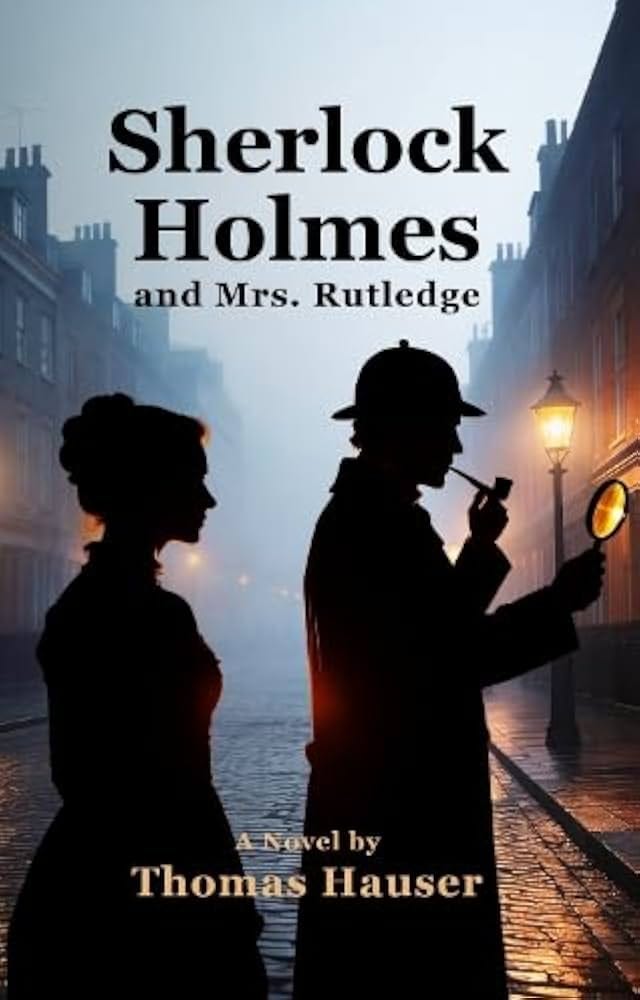
“I’ve written historical fiction about Mark Twain, Charles Dickens, Beethoven,” he explains.
“I had written three previous detective stories. I enjoyed both genres enormously and I decided to blend the two together and write about Sherlock Holmes. And the genesis for it all was, I had this line in my head, ‘She is a beautiful woman, Watson.’
“And everything flowed from there, the plot, the characters. Now, I changed the opening line a bit from ‘she is a beautiful woman’ to ‘she is an unusual woman’ but I had a wonderful time writing this book. It’s great fun to have Holmes and [his sidekick] Watson and Mrs. Rutledge rattling around in your head.”
Obviously there have been many iterations of Holmes and his ensemble of characters, and Hauser has focused on traditional Holmes, with the first half of the book set in 1891 and the second in 1906.
It’s not Holmes vs. the Nazis. Holmes is not depicted as a James Bond-type action hero. He’s a sleuth who uses his cunning and guile to level any playing field.
And Hauser has created a powerful and formidable female lead in Mrs. Rutledge.
Often, Sir Arthur Conan Doyle, the original Holmes author, has female characters in more submissive roles, whether they’re cooks, maids or victims.
But Hauser is used to making women the stars. Two years ago, he wrote a book called My Mother and Me. His mother, Eleanor, died, aged 96, four years ago.
“My mother lived a long, very rewarding life,” Hauser says.
“And My Mother and Me reached out to a totally different audience. It was not just about relationships between parents and children, but what it’s like to get old and then very old, and finally reach a point where you really feel you’ve lived long enough and you’re ready to die.
“And one of the most rewarding things for me is when I get emails from a reader who will say, ‘I just read My Mother and Me and it resonated with me because of my mother or my father or my son.’ And there are a couple of new Muhammad Ali anecdotes in My Mother and Me, so I keep coming back to that. But I just love writing in all genres.”
His new book tells the story of Holmes and Mrs. Rutledge.
“And I enjoyed creating that character, having Mrs. Rutledge and Holmes interact with each other,” he adds. “And then, as the story evolves, see how they change each other. One of the things that makes good fiction work is that the characters change over time. And they do that together here in a sense. And I’ve got a murderer, I’ve got villains, I’ve got good characters, there’s betrayal, sexual obsession. I touch on a lot of themes. But at the end of the day, I hope that people simply read this and say, ‘Hey, I enjoyed this. This was a fun read. This was a good book.’
“One of the most satisfying things about writing for a living is the realisation that on occasion people actually read what I write. You’re a writer, you’re a creative artist, you have that feeling.
“So if people read Sherlock Holmes and Mrs. Rutledge and they enjoy it, then I’ve done my thing on that.”
Hauser implores those who read the new book to reach out to him with their thoughts by contacting him directly at thomashauserwriter@gmail.com.
“I promise that I will respond,” he says. “I like hearing from readers. And if they have something negative to say, I’m open to listening to that too. If all somebody writes me is, ‘Oh, I loved it,’ that’s nice to hear, but I don’t learn anything new. So, if somebody has something thoughtful to say on the other side of the coin, I’d love to hear that too.”
**
But Hauser is far from done with boxing. He has a couple more books in the pipeline, including a quotations book he’s worked on for years that stretches over 100,000 words and that dates back from the Iliad all the way up to the present day and would serve as the complete collection of boxing quotes. And there’s more to come on Ali.
“I also came upon, several months ago, a treasure trove of unpublished photographs from Ali-Frazier III in Manila,” Hauser reveals. “And those will be published in book form sometime next year by Pear Publishing along with the text that I will write based, in large part, on 75 hours’ worth of old tapes with Joe Frazier that have never seen the light of day before. I love writing about boxing and I’m hoping that both of these books, The Treasury of Boxing Quotations and the coffee table Ali-Frazier III book, will add to what’s out there to help people understand and appreciate boxing in general and Muhammad Ali and Joe Frazier in particular.”
Hauser’s literary contributions are already beyond significant in boxing. The more he can offer the sport, the better, even if we have to share him with Beethoven, Sherlock Holmes and Mark Twain and, of course, Mrs. Rutledge.
Great article, Tris. Definitely learned more about Hauser's other writing, so will check that out! Can we expect 600 articles a year here? 😂
The Black Lights might be the best boxing book ever, Hauser is the best. Really enjoyed this.