


I was on my honeymoon when Leavander Johnson died. I was on my honeymoon when he fought Jesus Chavez and I was on my honeymoon when I learned that he had been taken to hospital after the contest. Leavander was a fighter and a champion, and between 2000 and 2002 I was a fixture in the Atlantic City Police Athletic League. Scope Wilson was there. Cash White was there training fighters Check out his record. He’s gone now, Cash, and BoxRec still occasionally add to his record. In 13 fights he fought Bennie Briscoe, Jimmy Hairston, (twice), and Joey Giardello. He’s listed at 4-9 (1 KO) and was always helping young fighters in the PAL.
Johnson was the king in there – as the best active fighter. Sure, the likes of the Klitschkos would pass through, welterweight contender Shamone Alvarez was also there, but it was Leavander’s turf. It was his gym. It was his home. His trainer was his father, Bill, and Bill would take me on the pads and teach me some bits.
Initially I was there to box but as time went on and I wrote more I interviewed Leavander a few times. He was always confident but never arrogant. He believed the world title was his destiny and he wouldn’t rest until he got it.
The irony was that Chavez was his first defence and having worked so long to achieve his dream, his title and life were taken in the same fight. It is heartbreaking, but his family always took solace from the fact that Leavander died doing what he loved and as the champion of the world. I got that.
In those days, as I traversed the US to meet different fighters and visit different gyms, I had an old point-and-shoot camera that had a film inside that wound itself on after each picture. You would take your photo and hope for the best. When you took the film in to be developed, you could get anything. There might have been a finger in the way, the light might have been bad, or you might have nailed a David Bailey picture for the ages.
In all my shots of fighters, only one never came out. It was of me, Leavander and Matthew Saad Muhammad taken in the PAL Gym. I remember it because when I took the film in to be processed, I raced to see that shot with enthusiasm. But it wasn’t there. A couple of pictures were blurred or just shadows and it must have been one of them.
I did’t mind, though. Of all the fighters and ex-fighters I spoke to, Leavander was by far the youngest. We would have time to take another shot. We would get that moment again.
Only we wouldn’t and we didn’t. I have a cassette of one of our interviews but no pictures. Most shots of Leavander you can find are from the Chavez fight and I’d rather listen to my old tape than see those. But, of course, what I’d really like is the picture that never came out.
HIGH-ROLLERS in Atlantic City either stop at the ever-expanding boardwalk empire or the plush casino-filled marina.
But the glitzy, so-called glamour spots of the New Jersey shore sandwich some of the poorest communities in the State.
There are desolate wastelands, derelict buildings and vandalised cars, not to mention widespread poverty and crime. Some money has been ploughed into areas to attract more visitors but the investment has been restricted to places that were not crying out for it.
New shops have sprung up and many of the casinos have had facelifts in the past decade. The ghettoes, however, amidst the boarded up windows and unkempt facades, have been left alone. Some have even deteriorated.
The rich have got richer and the poor do what they have to for survival, fighting for a way out or just to get through the day.
Yet a handful of blocks back from the gaudy boardwalk stands a new symbol of hope for the population. Situated on a small, out-of-keeping island of manicured grass and landscaped gardens, City Center Park provides a welcome diversion from the less aesthetically-pleasing environs that surround it. One’s focus is not on the off-licenses, the cheap strip shows or the rundown dollar stores nearby but on the oasis behind the black-glass, breeze-block of a library.
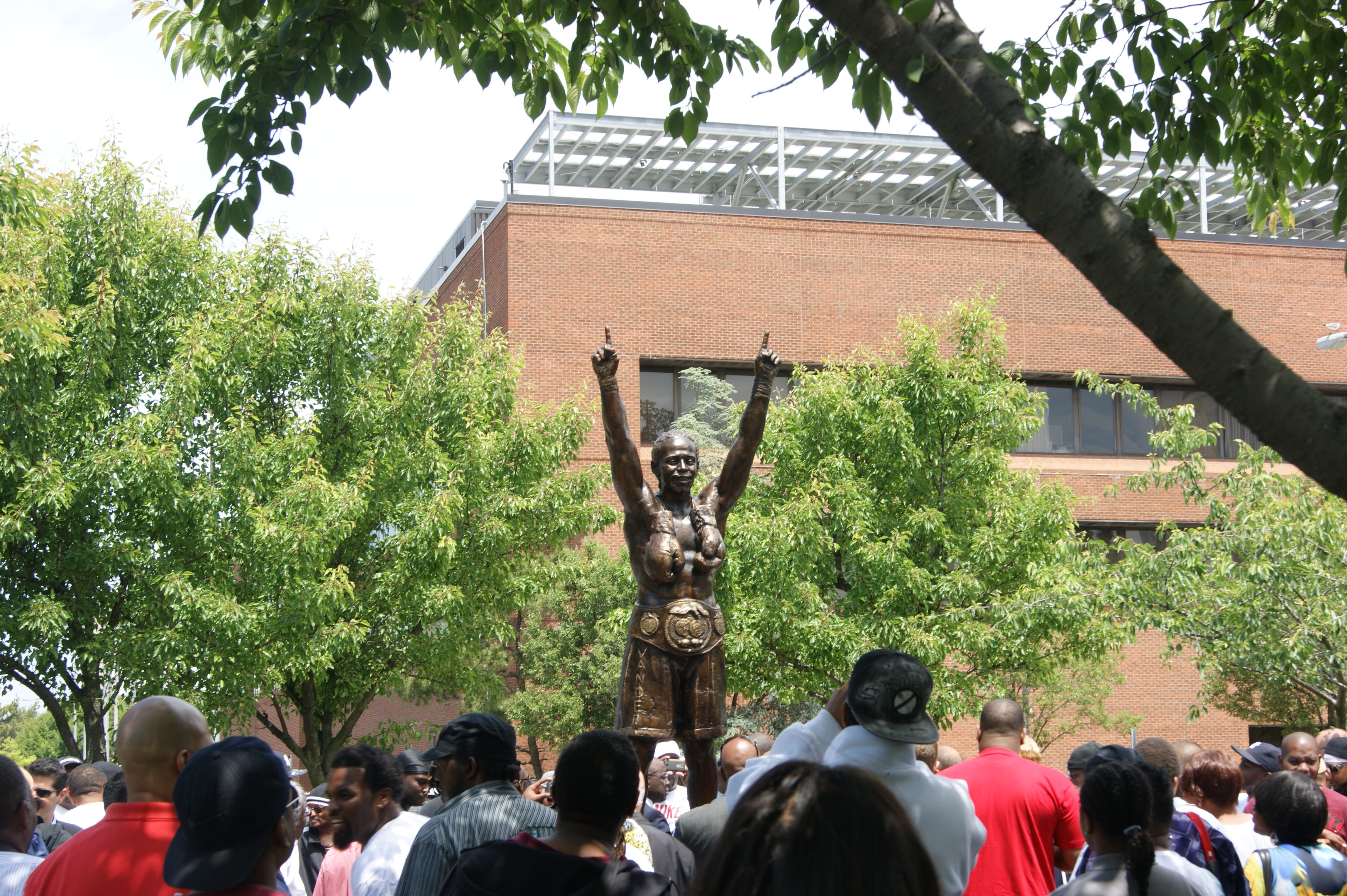
And amongst the greenery stands a statue.
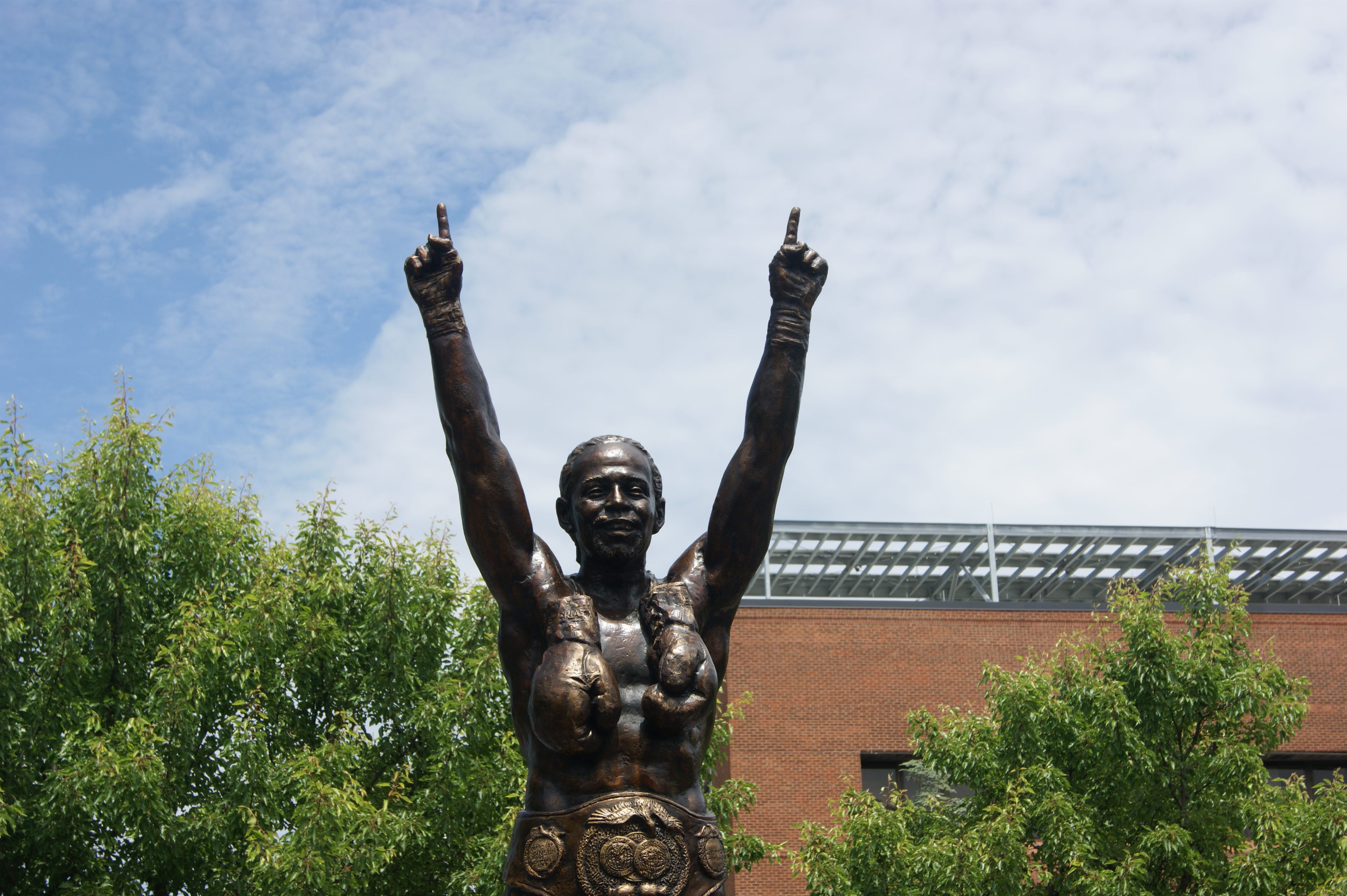
A bronze boxer cuts a solitary figure. The world title is worn proudly around his waist and there is a knowing, familiar twinkle in his eye. His arms are stretched out above him, his index fingers point into the blue skies overhead.
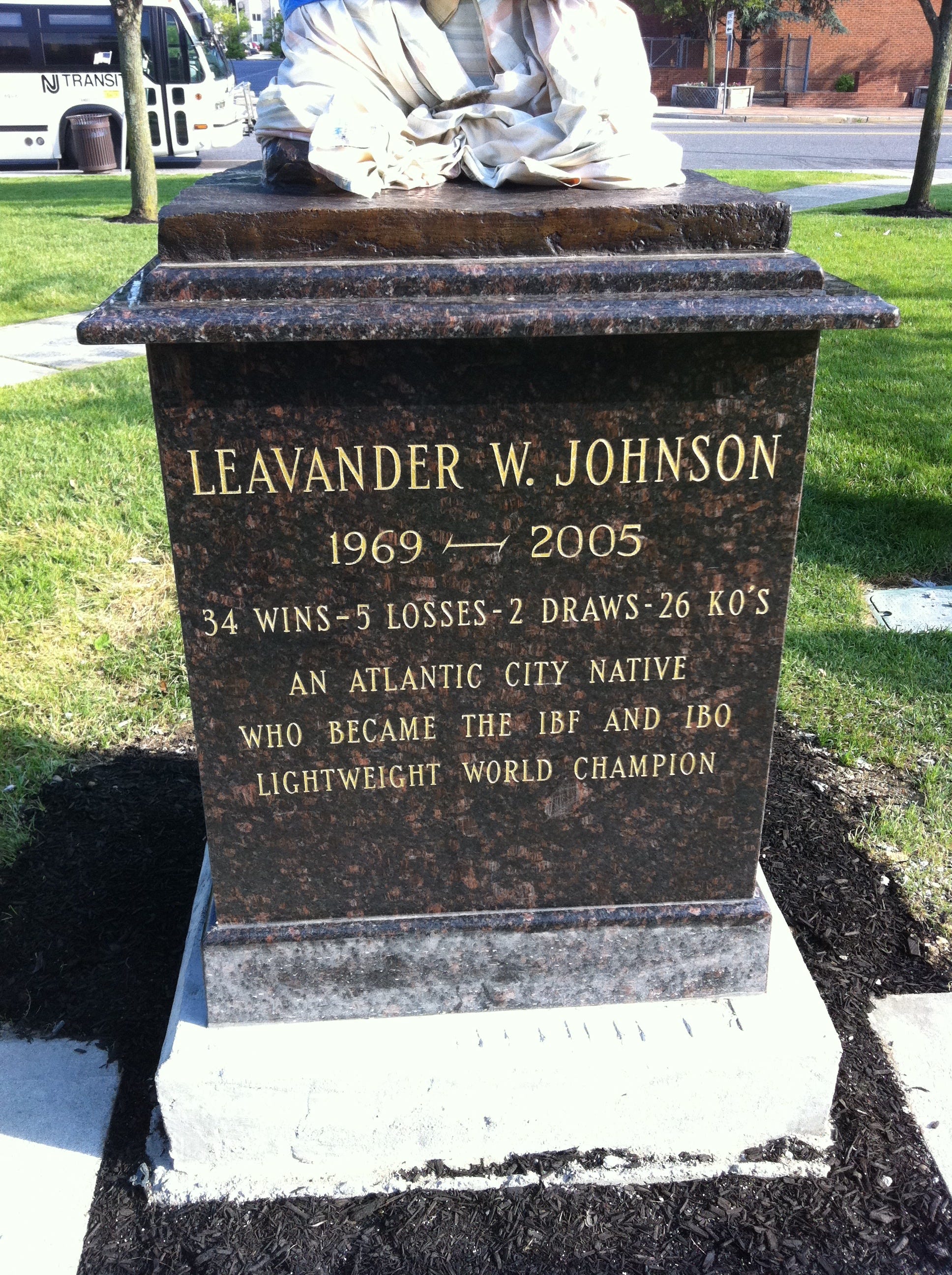
Leavander Johnson was a former IBF lightweight world champion.
He was not an all-time great. He was not widely-known, certainly outside of the sport. He was a good, hard-working pro who was appreciated and respected in Atlantic City.
He trained at the Police Athletic League gym three or four blocks from his home, where he lived with his dad and trainer, Bill.
A father of four, Leavander lost three times fighting for world titles.
In 1994, he was defeated in his first challenge, and his long unbeaten record was taken by Miguel Angel Gonzalez via eighth-round stoppage in Mexico (said to be caused by a cut). That was for the WBC belt. Four wins later (but almost three years on), Johnson went into bat for the WBA title, again at lightweight, and – floored four times - was stopped in a gruelling battle by Orzubek Nazarov.
In 2003, and with Johnson now 34, experienced Mexican Javier Juarguei stopped Leavander in 11 rounds and that appeared to be that. It was Juaregui’s Cinderella story as he captured the crown in his 16th year as a pro.
Yet Johnson never gave up, even into his mid-thirties, and remained adamant it was his destiny to win the world title.
We spent a lot of time together in Atlantic City between 2000 and 2002. We trained together, his father and trainer, Bill, worked with me, too, and Leavander kept reiterating that he would not rest until he had earned, “That world title.” He always talked to me as though it was written. Beating the likes of future champion Sharmba Mitchell had him convinced he could do it. It did not matter that time was not on his side or that he had come up short thrice before. It was about the final chapter in the story, the one where he wins the belt and makes a fortune before retiring.
“I ain’t trying to fight too long but I just think I deserve recognition that I haven’t got yet,” he told me.
“I deserve to be a champion. That’s what it’s all about.”
Then, in June 2005, he travelled to Italy and finally won the vacant IBF title against Stefano Zoff, taking the championship back to America after seven rounds, and 12 years after his first shot. He had done it. The dream had come true and the empty years of pain, sacrifice and dedication had paid off.
The celebration, however, was tragically short. He had been able to call himself a world champion for just three months before he was killed, defending his beloved title for the first time. He was battered and beaten to the head and body over 11 rounds by Jesus Chavez in Las Vegas before being stopped in 11 rounds. That was on the Saturday night. Johnson died from injuries sustained in the fight on the Thursday in Nevada.
Leavander’s statue is not a record or testament as to his fighting prowess; it is a lasting tribute to his willpower, his strength of character and his story. That is what has immortalised him.
Lou DiBella, his former promoter, welled up as he spoke during the unveiling ceremony a fortnight ago.
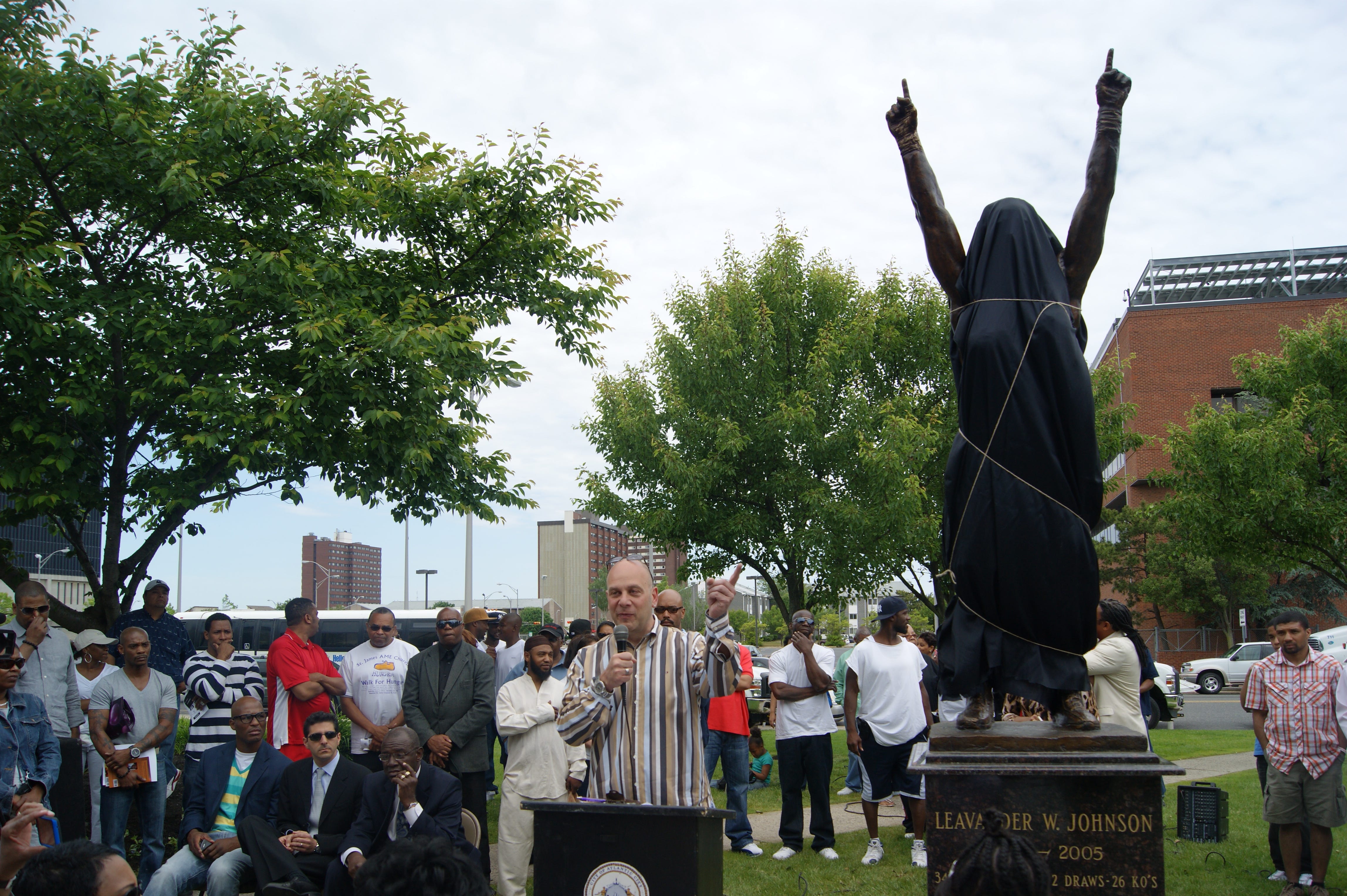
The sun was shining and a crowd of around 200 onlookers, family friends, political leaders, boxing people, policemen, gangsters, firefighters, locals and passers-by were united as they awaited their first glimpse at the statue.
“When I think back about my friend Leavander Johnson the word that comes to me first is faith,” said DiBella. “He had faith in his family, he had faith in God and he believed he could achieve anything. Above all he had faith in himself, the kind of faith that allowed him to persevere in this very difficult sport, often under the worst of circumstances, barely making a living yet becoming a world champion and realising the dream of his lifetime.”
Lou placed his hands at Leavander’s feet and stared up at the still-covered statue several minutes before it was revealed. He paused, thought for a moment, looked at the audience and said: “I think it’s proof that a person dies but a dream doesn’t. A dream that’s realised never dies and Leavander Johnson lives forever.”
Philadelphia legend Bernard Hopkins spoke for 10 minutes before the unveiling. His attendance was appreciated enormously by the Johnson family and he also had kind words for Bill, whom he described as an “astute trainer.”
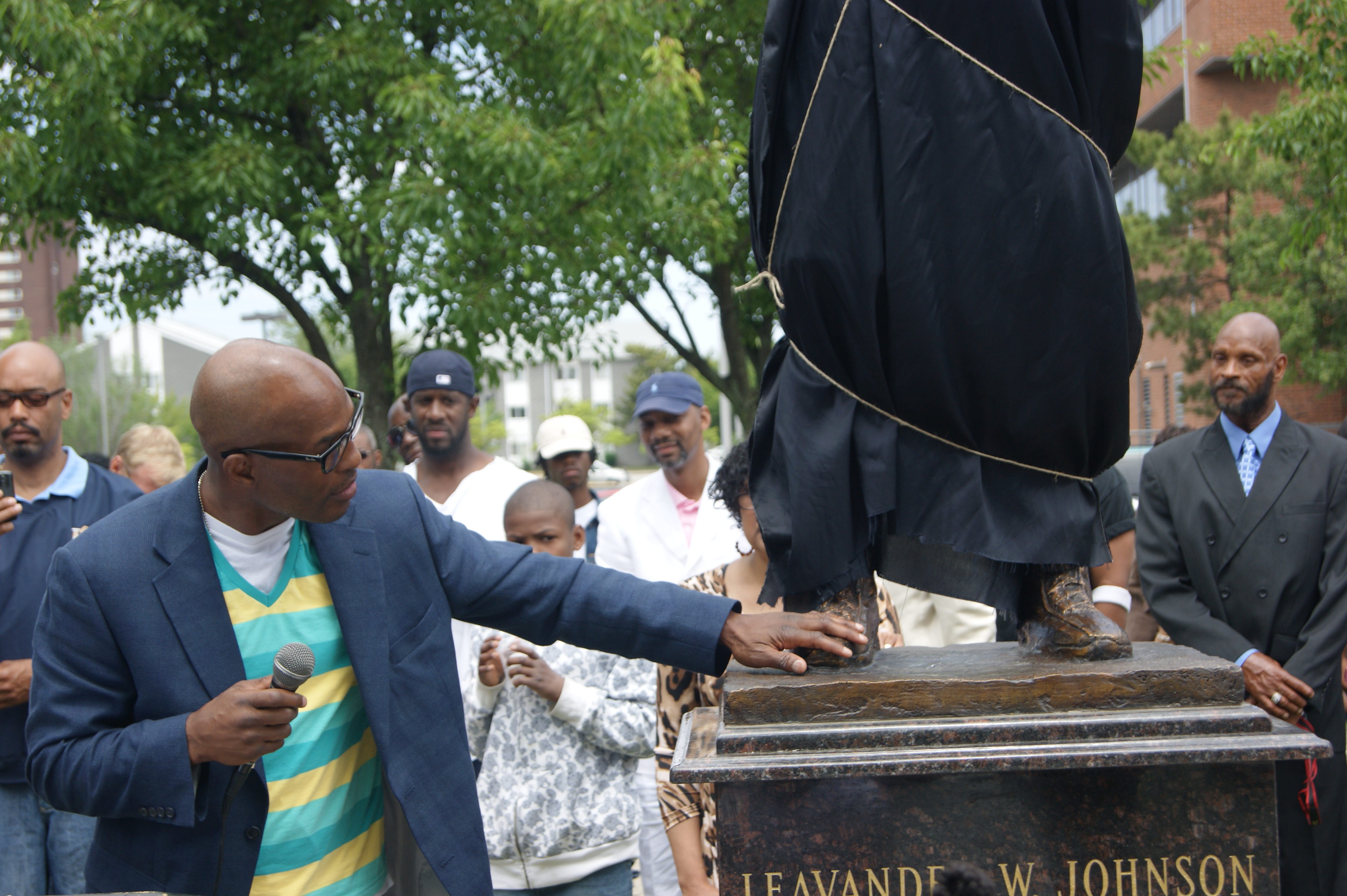
“We have a connection,” he said, peering at Leavander’s still-covered bronze features. “Leavander didn’t have to go to places I had to go to get where I am now but there’s still a connection in not giving up. Our stories are the same, we just went different places but had the same ultimate goal, to be a champion of the world.”
Hopkins talked about the hardships of being a fighter, admiring Johnson’s dedication and desire to achieve the ambition he had always held so close.
“Leavander wouldn’t want you worshipping the statue,” Hopkins told the congregation. “What he would want is for you to embrace the inspiration.”
That is what the statue is about. That is its true meaning.
It is why it received widespread support from the city council.
Atlantic City Mayor Lorenzo Langford, on hand with political rival Marty Small, has been involved in the statue campaign since its inception.
Initially it was going to be situated outside the gym but, in a deeper, darker corner of Atlantic City it was felt not enough people would see it. Instead, they named the street outside the gym after Leavander.
“There were times when it seemed this day wouldn’t come but I said we had to make it happen and it has,” stated Langford, before looking at his opponent, Small. “We have our differences but when it comes to doing the right thing for the residents and the people here we don’t have any. Leavander is our champion so we now have this monument to remind the people that something good can come out of Atlantic City.”
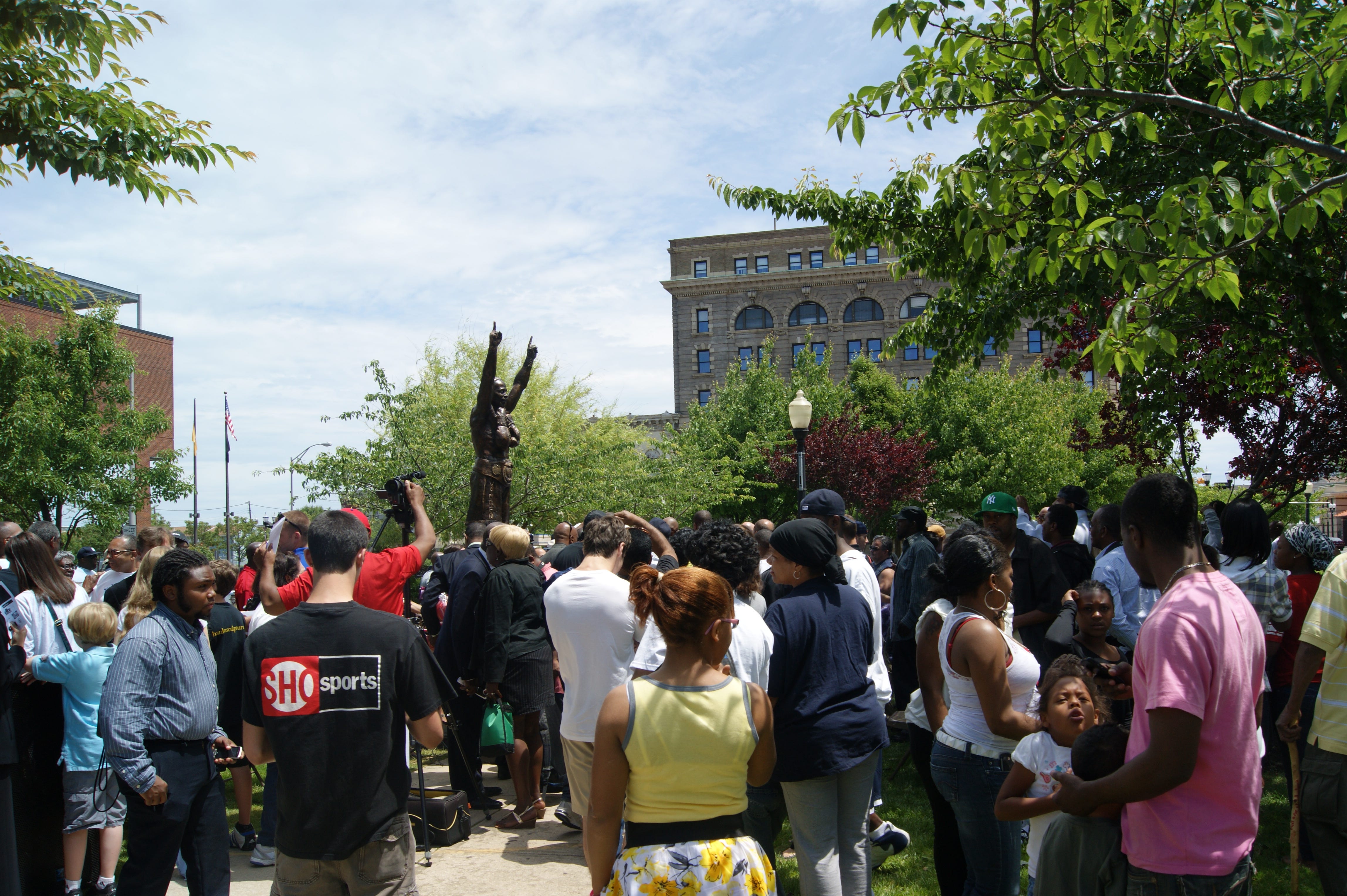
Cllr Small, agreed. “This is a great day,” he said of the ceremony, called The Last Round. “This shows that if you keep believing you can get it done.”
Former New Jersey boxing commissioner Larry Hazard added to the tributes as the keynote speaker.
“He had a dream,” said Hazard, who recounted Johnson’s title losses and how the fighter dusted himself off, “Went back to Atlantic City, went back to the drawing board and tried harder.”
“And he wasn’t going to let anything stop him,” continued Hazard. “Leavander Johnson had a dream. Leavander Johnson wouldn’t quit and he kept going until he achieved that dream.”
New Jersey sculptor Brian Hanlon called Johnson “The Rocky of Atlantic City.”
And Johnson’s death could help others in the city, but not just by inspiring them. The Leavander Johnson Foundation – set up in the weeks after his passing - is an empowerment organisation, to help communities improve their quality of life, to contribute to poorer areas using flexible approaches and innovative strategies. Leavander would have liked that.
The eventual unveiling of the statue was swift, heart-rending and tear-jerking experience, brought to an unforgettable, fitting conclusion by Showtime ring announcer, Jimmy Lennon Jnr.
“I’ve had the opportunity to introduce Leavander in many venues around the world and if I could have the honour of introducing him as he lives forever in this beautiful park here, join me with a round of applause,” began Lennon.
The crowd followed his instructions and the noise built into a crescendo as he introduced Leavander, my friend, an Atlantic City icon, one last time. Jimmy Lennon Jnr, Mr Showtime never sounded so good as he belted out: “Ladies and gentlemen, in this corner, wearing the bronze trunks, weighing in at the lightweight limit of 135lbs, proudly representing his hometown of Atlantic City, New Jersey, please welcome the former IBF lightweight champion of the world, Leavander Johnson.”
The crowd clapped in rapture, tears streamed down the faces of just about everyone in attendance as they whooped and hollered in spite of their obvious sadness.
The blanket was pulled off the statue and the fighter was unveiled. Leavander Johnson had been immortalised. His dream will live on.
Still shocking. I remember staying up to watch that show. Marco Antonio Barrera was on it. These incidents never get any easier to process or understand, in the context of our role as viewers.