


It all seemed frightfully optimistic.
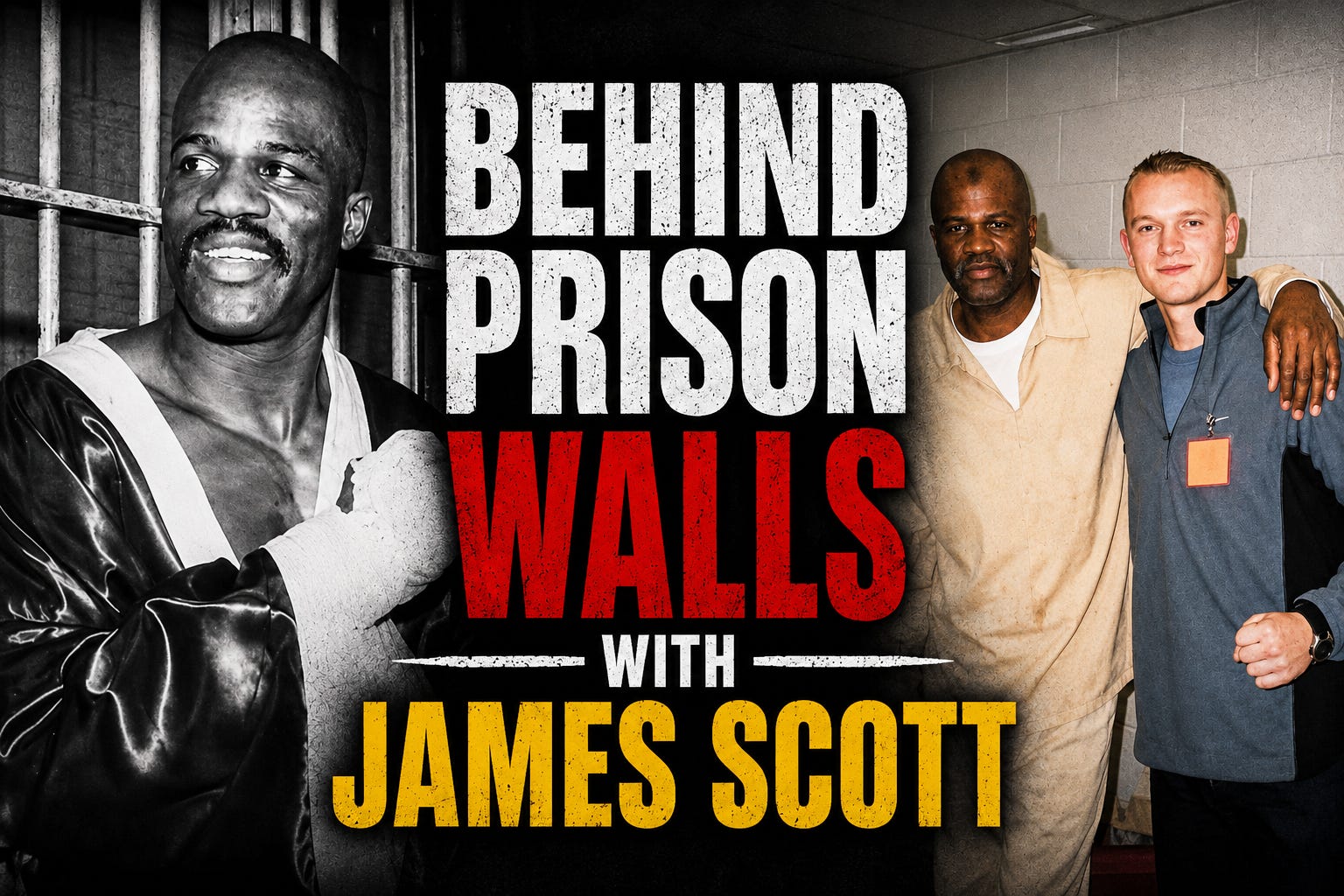
I found the details of former light-heavyweight contender James Scott using the “offender search” portal on the New Jersey Department of Corrections website.
There had to have been a section where you applied for a visit. It was so speculative. I must have switched off as I don’t really know what was asked of me or what forms I had to fill out.
While I had no idea if my application would see the light of day, let alone be approved, I knew that if I didn’t ask, nothing would happen and there would be no visit to see James Scott.
Scott, you see, was a fascinating story. He’d been in trouble his whole life, in and out of juvenile centres and jails. He’d escaped from at least a couple.
But he could fight. He turned pro in Florida, was working with Chris Dundee while the great Hank Kaplan was doing some publicity work for him.
He won his professional debut in 1974, a six-rounder, but he was scheduled for 10 rounds in just his fourth fight and there was no going back.
In his first six contests, he beat the respected 29-10-4 Baby Boy Rolle – who fought out of the Bahamas – and the experienced 34-11-2 Ray Anderson.
However, in 1975, Scott ran into trouble.
Those close to him said he should never have gone back to New Jersey and, as a consequence, he certainly never went back to Florida.
He was charged with the murder of Elliott Russ during what seemed to be a botched robbery. A drug deal gone south.
It was alleged that Scott shot Russ and he was sent to prison in New Jersey. Scott wouldn’t see the real world again for 30 years.
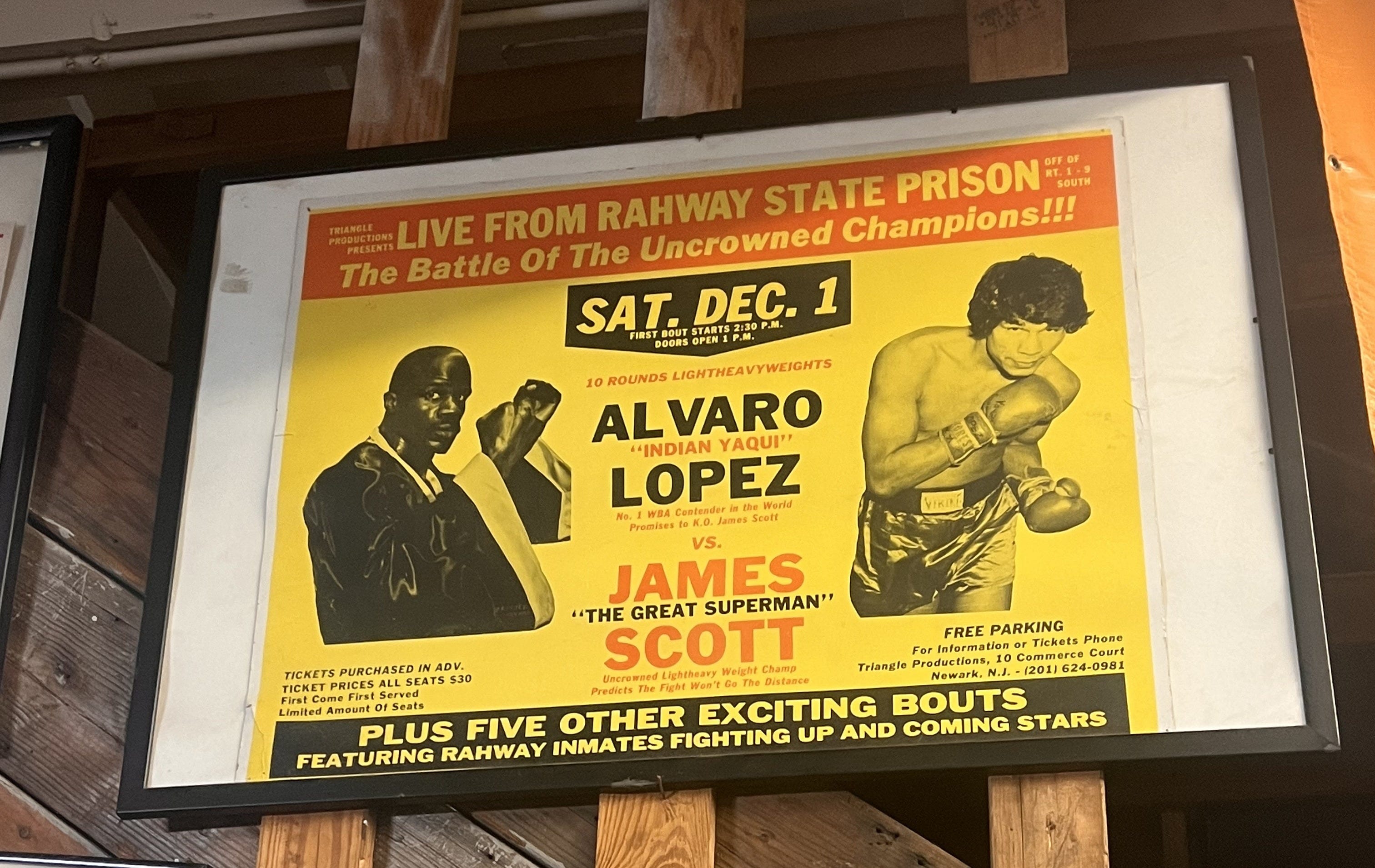
What happened in prison never happened before and it will never happen again. Scott, with the help of influential prison warden Bob Hatrak, headed up a boxing programme. It was not just any programme, either. Given he was on parole, Scott fought for his right to fight and, on May 24, 1978, he was allowed to box Diego Roberson behind the walls of Rahway State Prison.
Scott hadn’t boxed in three years, but he halted Roberson in two and had another 10 fights behind the walls, sometimes in the prison yard and sometimes in the prison’s sports hall.
He battled his way up to be the No. 2 contender and, astonishingly, notched jail victories over the likes of Eddie Mustafa Muhammad, Richie Kates and Yaqui Lopez.
He was known for his incredible fitness regime of an hour of running laps, 1,000 push-ups and 1,000 sit-ups each day.
That earned him the name “Superman.”
This is not a ‘normal’ story.
Scott boxed on HBO. The likes of Sugar Ray Leonard were brought in to call his fights. Yes, tickets were sold, but much of the audience was made up of inmates.
And Scott’s rise through the ranks continued until he was eventually found guilty of the robbery and, years on, found guilty of the homicide.
There were maybe one or two who got to interview Scott in prison on his erratic journey. He had lost two of his last three fights and was not allowed to fight after being beaten in September 1981 by the brilliant future Hall of Famer Dwight Qawi, then Dwight Braxton, who, ironically, was a former inmate at Rahway himself.
More than that, he was a sparring partner of Scott’s and claimed that James owed him a sparring debt from their training days.
Still, Scott had been around the block by the time I arrived 22 years after that. He’d been moved to Northwood Prison and then, when I visited, was being held in Northern State Prison in Newark – which, at the time I went there, was recognised as the crime capital of the USA.
The night before, I’d been at a Larry Holmes charity function with my friend Tom Jess, where the likes of Iran Barkley and Harry Arroyo were in attendance. I stayed the night at the venue and then Tom took me, first thing the next day, out to the jail. Tom needed to get to work and his only window to give me a ride was at an ungodly hour and, when we arrived at Northern State, Tom waited while I went to check in at reception to make sure me being accepted to see Scott had not been a mirage.
“Mr Dixon, we see you’re here but you aren’t supposed to be here until 2pm, when visiting hours start,” I was told.
It didn’t really occur to me that having to wait from around 9am until 2pm was a long time. I jogged out and excitedly told Tom to go to work. Everything would be just fine.
He drove off and there I was. Alone. In a prison car park. It was then that it dawned on me that 9am until 2pm was a long time.
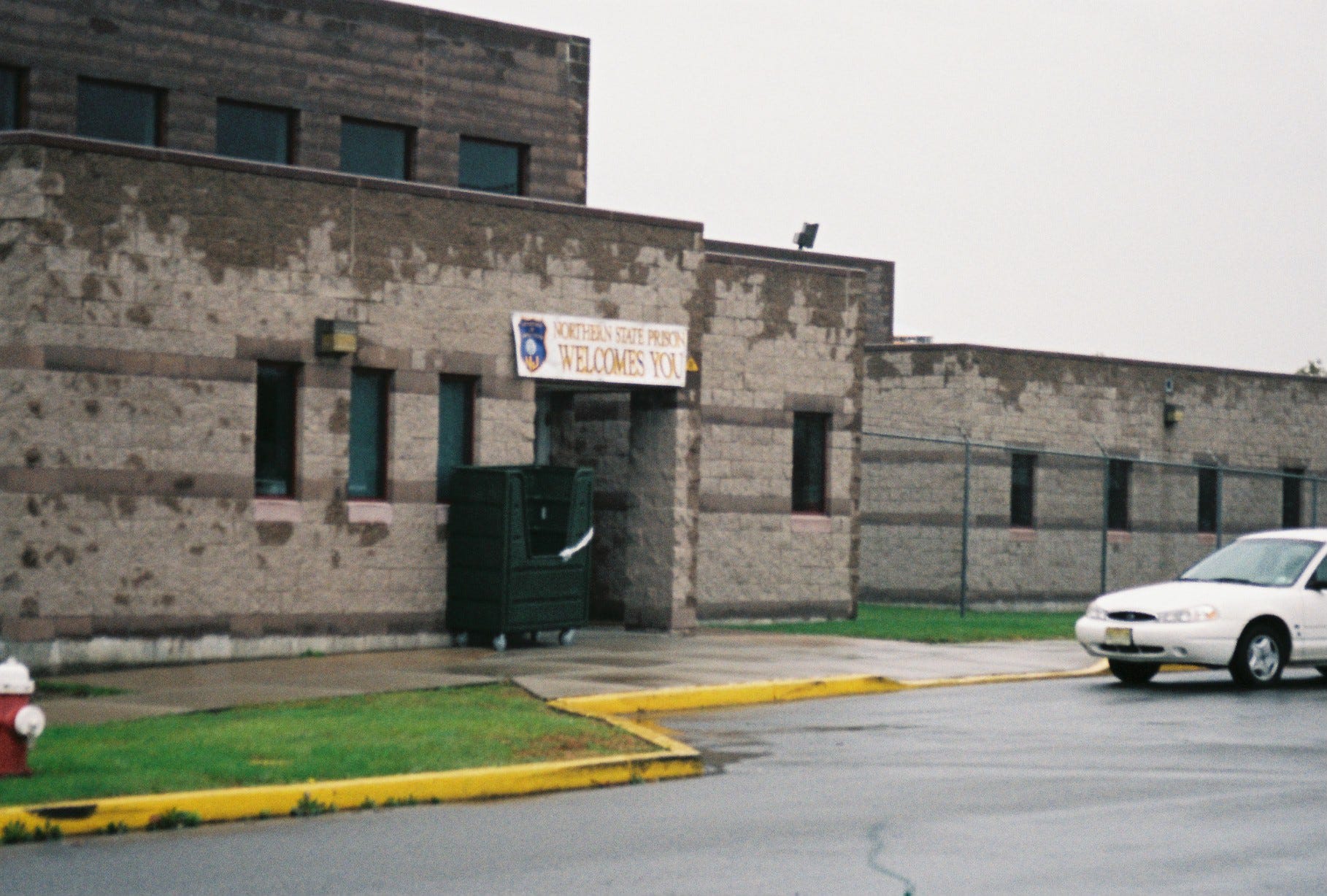
I looked around. It was grey, miserable, damp. Newark seemed to be far enough away that if I walked there, I’d have to turn around and walk back. Besides, I was broke. It’s not like I had money to buy anything.
So I started walking back the way that Tom and I had come and it was strange but, next to the prison, was a Holiday Inn. I wasn’t above loitering in a hotel lobby for a few hours, so I started to make my way in and, most bizarrely, I saw someone I thought I recognised loading his case into the boot of his car.
“Eddie,” I asked.
The man looked at me and beamed.
“Yo, Tris. How are you doing, my man.”
Not only could I believe that it was former light-heavyweight contender Eddie Mustafa Muhammad, I couldn’t believe he knew it was me after our interview in Las Vegas a year or so earlier.
And as if that wasn’t coincidence enough, Eddie had told me during that interview that the one person he felt beat him fair and square in his career was… James Scott.
“Are you here to see James,” I asked Eddie, rather naively.
“James who?” he asked.
“Scott, James Scott,” I excitedly repeated. “He’s next door.”
“In the hotel?”
“No. The prison. Northern State Prison. It’s next door.”
“Ah man, I wish I knew. I have to go and catch a flight. Here, let me do something.”
As Eddie explained he’d been in Newark training cruiserweight veteran Al Cole, he penned a note to James with his number and, “I’m here for you,” written on it.
“Make sure he gets this,” Eddie said.
Eddie headed off and I went into the hotel where, for the next few hours, I thought about the coincidental meeting and devoured the newspapers that were complimentary for guests, USA Today and the Newark Star-Ledger. I read them cover to cover. I grabbed a free coffee from the machine in the lobby, bought a banana and walnut muffin and saw out the remaining time.
Through the doors into the prison, the early shift workers had been replaced by a new team and I had to go through what I was doing again. Fortunately, I was still on the magic list and was sent through into the prison.
A high-ranking guard, Nichols Calenicoff flanked me as I traipsed through numerous security stops and scanners. There were long glass panels with inmates staring freely at me. Of course, you wonder what these people did. Many of them were in for the most serious of crimes.
I didn’t even know what I was doing. I would have only been about 23.
Nick and I eventually found ourselves in a small room, a cross between what looked like a school classroom and a study. There was a table, a few chairs, a blackboard, that might have been it.
And we waited for Scott.
And waited.
It got to the point where Calenicoff said Scott might be late because he’s hard to control.
Gulp.
