


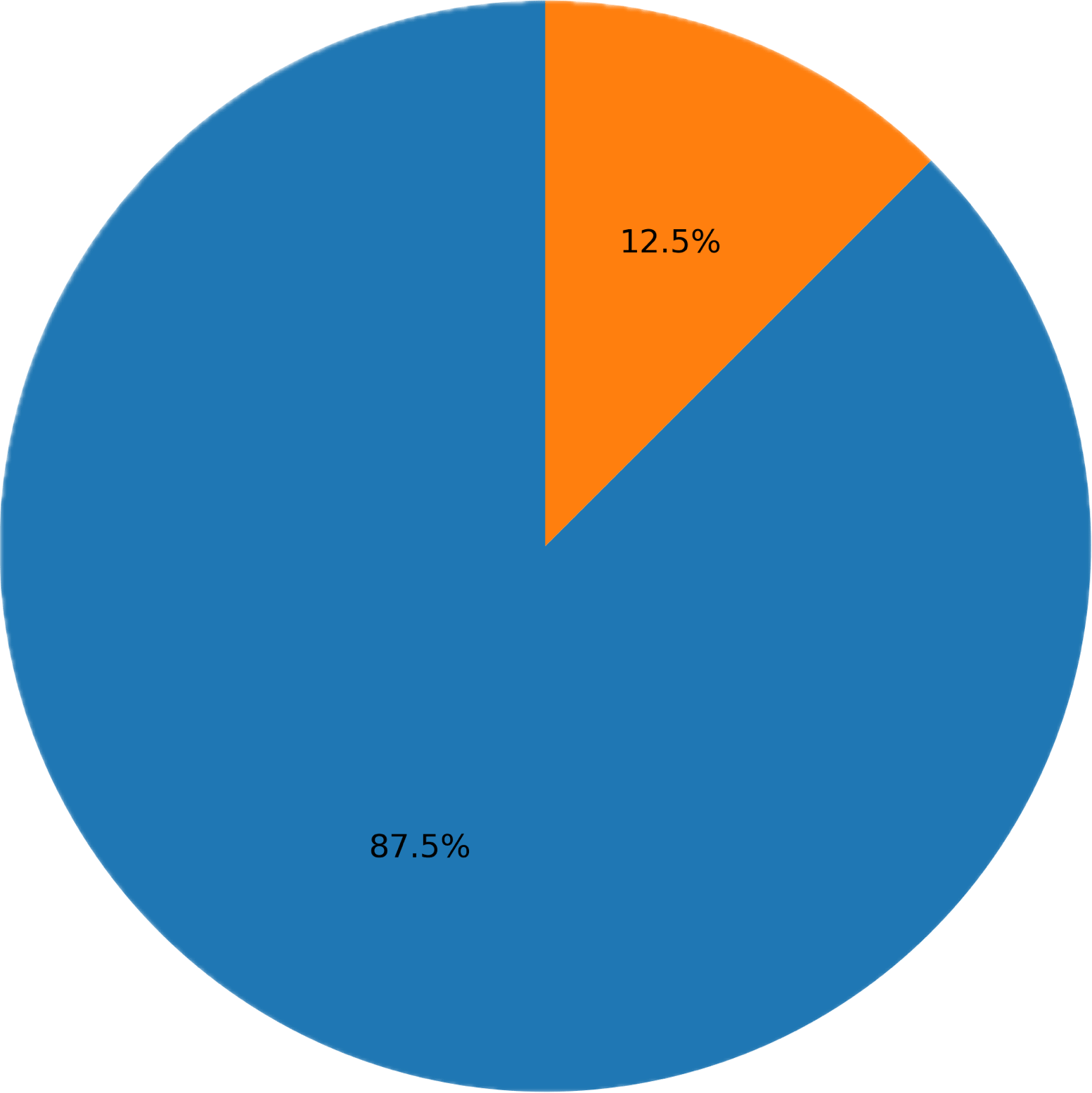
YES – 819 votes
NO – 117 votes
I don’t use X much these days, for a multitude of reasons, so when I put up a relatively innocuous poll on Tuesday, I wasn’t expecting much take up to the question, ‘Is boxing broken?’
I asked for feedback and offered two replies as part of a poll, option one was Yes, it’s broken. Option Two was No, never better.
Had I been giving it more thought, I would have thought of one or two middle ground replies. That was suggested to me.
We could have had, ‘It’s broken, but a couple of small fixes and it would be great.’ Or, ‘It’s in a slump, but things are changing,’ or ‘It’s great, but we need to be careful.’
And I was called out for the lack of options, which is fine.
Tom Houston said: “I’m not voting because that’s a crazy dichotomy. How about a few choices in between.”
“Somewhere between the two,” wrote Karl Gibson.
JohnnyBoyRejoin stated: “It’s neither broken nor better than ever. The sport has been fractured for many years but in the midst of that we’ve always managed to get some big fights made. I’m concerned about Dana White getting involved. Zuffa could well be our version of LIV Golf. But generally it’s okay.”
*
But I can’t lie, the court of public opinion was unbothered by the lack of nuance because the concern for boxing’s health is very real.
By the end, there were 936 votes with 87.5 per cent believing the sport was broken and just 12.5 per cent thinking it was thriving.
At my last count, there were some 115 comments (and a few quote tweets) and plenty of common themes, too.
We will go ahead and look at the comments, providing analysis and opinion as we go along, but for me it feels like the sport is being inhabited by strangers when it was the familiarity of what came before that had created such a community.
Fighters were, to start with, more accessible. That is a big part of it, I’m sure.
As an example, the likes of Frank Bruno, Ricky Hatton, Joe Calzaghe and Chris Eubank would attend events like the British Boxing Board of Control lunch or the old Boxing Writers’ Club dinner, but nowadays fighters would see themselves as above that. Traditions are no longer being passed down.
This was noted by Lucas Ketelle looking at the history of the sport.
“We are getting away from respect for history,” he said. “We used to value history too much in boxing, and now it seems like we are at an utter indifference towards anyone who came before the here and now.”
It’s interesting to note, too, that when DAZN tried to say George Liddard had become the youngest British middleweight champion and I pointed out he might not have even been in the top 10 youngest on X, I was decried a killjoy who shouldn’t be trying to ruin his big night. Damn the facts, and the likes of Mark Kaylor, Randolph Turpin, Terry Downes et al
Still, many fighters would rather be getting content done somewhere now, or be on a red carpet, and I think that comes through the generations. The likes of Stephen Smith, Tony Bellew, Jamie Moore and countless others would consume every page of Boxing News every week because they loved the sport and wanted to learn about it. Do young fighters today even pick up Boxing News?
And the magazine part led into another point made by @GaryAGray. He used to peruse the magazine selection in the newsagents where there was Boxing News, Boxing Monthly, The Ring, KO and Boxing Digest. Now, it’s so costly to get on the newsstand, BM has fallen by the wayside, KO has gone, so has Boxing Digest, Boxing News is monthly and The Ring is part of the problem.
“I was a boxing nerd,” wrote @GaryAGray. “For many years from a teenager buying all the mags watching as many fights as I could and recently listening to boxing pods all day. Now it’s too many PPVs, overhyped mismatches and subscriptions, so I’ve stopped everything.”
But it is hard to compare today’s coverage with yesteryear’s because times have changed just as much as boxing.
As I stated in a recent Mailbag, it wasn’t too long ago that British title fights would get coverage in the newspapers. Now I’m not sure Dalton Smith or Josh Kelly would get a mention. But, of course, newspapers were big business then and their print readership has dramatically declined.
Of course, when big names get involved, the newspapers come back. We are bracing ourselves for Fury-Joshua and everything that will come with it. It will get wall-to-wall coverage. But it won’t be written about in the newspapers by dedicated boxing writers as they scarcely exist today. Initially, many boxing journos were asked to take on another sport. Now, with most of them gone, covering the sport will be handed to a generic sports hand. That doesn’t help.
But it doesn’t seem all that long ago that I’d be sat next to the late Ron Lewis at The Times, Pat Sheehan and Colin Hart from The Sun, Kevin Francis from The Star, Kevin Mitchell and Donald McRae from the Guardian and Observer, Niall Hickman and Brian Doogan from The Express, Bob Mee at the Daily Telegraph, Ian Gibb at the Daily Mail, and that’s before you got to the US, where you’d have Tim Smith from New York, Dan Rafael at ESPN, Kevin Iole from Yahoo, David Mayo in Grand Rapids, John Saraceno from USA Today, Lance Pugmire and Steve Springer at the LA Times, Steve Carp in Vegas, Bernard Fernandez in Philly, Michael Katz, Bert Sugar…
When I was at Tim Tszyu’s first fight with Sebastian Fundora in Vegas a couple of years ago, I was asked to sit and wait with a table of written journalists while the fighters were brought over to speak to us. By the time Tszyu came over, there was me and one other. That was the only written press.
“Massively broken,” said @jagoboxeo of the sport today. “It’s now ran by teenagers with cameras pushing narratives from promoters so they can keep access.”
“The sport has been in decline as newspaper coverage began to die,” wrote Gabriel Montoya. “Free TV deals gave way to cable and PPVs. The sport is run by short-term thinkers and was sold out to the Saudis with much the same thinking. Boxing is where it is because of the people who have been running it.”
Michael Carter felt like good old-fashioned competition was best for business. “But Saudi control has ruined it. Promoters no longer compete, fighters don’t need to sell themselves, small halls are dying and most fights are PPV. Criticise the regime and you’re frozen out. Greed will prevail. And now Misfits is mainstream.”
“Young fans that walk in the boxing gym chatting about Misfits boxing one weekend, but with no mention of a decent domestic dust-up the following weekend isn’t great,” added Sean Anderson. “I mean, you could say at least they’re talking about boxing.”
Rob Hoar said that while the best have “somewhat” been fighting the best, he added: “Influencers and YouTubers fighting has beens is not of interest to me but I guess it does numbers and brings young fans to the sport.”
And, in part, that is another issue, that there are so few storytellers left, but also because there are so few outlets wanting to tell stories. Now it’s short-form, snappy, clicks, hits that are the markers for success. It’s not about five-star reviews for quality or a powerful product. Everyone wants success at surface level without realising that if you dig deeper into the characters, you can develop ‘buy in’ from an invested audience that cares.
And there is a lack of knowledge about what good long-form content looks like. For DAZN, some of their ‘long form’ is barely 20 minutes long but there are few inquisitions in the interviews, little pushback in their conversations even though what they do produce looks lovely and glossy, there’s not much substance behind the style. I watched 20 minutes with Teofimo Lopez recently and learned nothing. Same thing with George Liddard. Nothing I watched made me want to see their upcoming fights.
And DAZN has its critics and, according to my spot survey, plenty of the detractors are on X. Much of the criticism is to do with paywalls and subscriptions, but plenty also comes down to sycophantic commentary.
As well as “the five-belt era, Hamzah Sheeraz (more tomorrow), Conor Benn, Fury-AJ tedium, Steve Hunt of the Desert Island Fights podcast said one of his major problems was with, “arse-licking commentators.”
The positive commentary has become a bug-bear of mine, too. We are constantly being told that boxing is in such great shape, but if it was, this feature would have been a hell of a lot shorter. Sure, it’s great for those who have been touched by the money of Russian oligarchs and Saudi billionaires, but that’s a small percentage of the overall sport.
Glen Fraser said he was likely going to give up his DAZN subscription because “I hardly watch it.”
@saintsman1982 took it a stage further when he said there were too many platforms “and PPV has gone mental.” “Some domestic fights being branded PPV is wrong only world title fights being branded PPV is wrong only world title fights should be PPV. And promoters and fighters dodging certain fights is all wrong.”
One of the most significant concerns is around Turki Alalshkih, who a couple of years ago shared a picture of himself on social media as ‘the face of boxing’ and who was recently just rated the No. 1 most powerful man in the sport by Boxing News (I was on the panel).
But Matt Elliott, who feels the sport is broken, believes the financial bubble that has provided boxing with such a false economy in the last three years has caused a vacuum. “Turki came in paid over the odds for fights and gave some average fighters an inflated sense of their worth and now we are paying for that. Without him we wouldn’t have had some big fights but the minimum payday many expect is now too high for the market.”
“Turki has ruined the sport,” added British Boxing Hub. “He came in got close to all the promoters and fighters paid them crazy money. But it was all a ply to try to take over with Zuffa the sport has never felt more divided and shady. I mean they paid Benn 13mill to fight an injured Regis so MR couldn’t match.”
“Two fights in,” wrote Eddy Hebbron, “And everyone is going to be a world champion and only want to fight for money not legacy. Turki has ruined it.”
“Turki arrived as the saviour,” wrote @TheBoxingMadMan, “Did a few good shows then all went to shite. Warren and Hearn thrown to the kerb. Turki hooked up with Dana and things have gone from bad to worse.”
I’d also contest that we’ve had this glut of dream fights. You can hold some heavyweight fights up there, and both Beterbiev-Bivol fights, but we’ve also had Shakur Stevenson versus Josh Padley (yes, the Englishman was a late sub), Jai Opetaia against Jack Massey and Ellis Zorro, Chris Eubank Jnr versus Kamil Szeremeta, Joshua and Fury against Francis Ngannou, Usyk against Rico Verhoeven, Hamzah Sheeraz against Alem Begic and Simon Zachenhuber, Richard Riakporhe-Tommy Welch, Adam Azim-Kurt Scoby and plenty of other fights that don’t fit with the remit of the best fighting the best.
And, yeah, I’m saying it, Crawford-Canelo. Who wanted that, really? Great final act for Crawford, if that’s what it was, but it wasn’t a dream fight. And as for Canelo, we also got the William Scull bore.
“The best stopped fighting the best within their weight class,” offered Belle Boxing Club who added, importantly, “lack of activity.”
That hyper-inflation has led to fighters boxing barely once a year. Three outings for a top fighter is seen as revolutionary and “old school.”
In fact, Jonathan Lewis said “I find the undercards are poor these days. Chief support used to be a for the world title, now I find them very poor, now PPV ain’t even for a world title.”
There are some who felt the previously-questionable regime to challenge boxing’s status quo, MTK, was still responsible for deep wounds in the sport.
Stephen Dempster said: “The Kinahan/MTK era badly damaged the sport. The Daniel Kinahan enablers and supporters in the sport – boxers, trainers, promoters etc – still in the sport and we know who they are – they polluted boxing and that cannot be repaired. They know who they are too! We see them.”
Another common theme was that the best were still not fighting the best, even with the influx of Saudi wealth.
Richard Allan said, “No one fighting each other” and “nothing on tnt/Sky [although Sky now has the deals with Zuffa and MVP] making it expensive to access” and he added “zero drugs checks.”
And Allan was not alone with the latter sentiment, either.
“Failure to deal properly with issues re drugs from Fury to Benn demean the sport,” wrote Andrew Collingbourne. “Money as ever talks and no coincidence that the bigger the profile of the boxer concerned the inevitability of being exonerated with the most ludicrous excuses invariably involving foodstuffs.”
“The PEDS issue for me needs to be stamped out once and for all,” wrote Danny Coveney. “None of this serving undisclosed bans. Name and shame so we all know when a fighter is serving a ban. Second catch, ban for life.”
Part 2 coming tomorrow
In light of the talk last night about AJ-Fury being in doubt, I keep thinking about Ali-Foreman. Don King got each man to sign a contract agreeing to fight the other for $5m. He then went away and found someone to put up the $10m. King may have been a crook, but he knew what he was doing. Another sign that boxing is broken is the evidence of incompetence with some of the key players today.
I think the point about not reading boxing news is more a generational shift away from reading in general. If there is generally less readership across all written media you should expect that to include boxing press, too.