


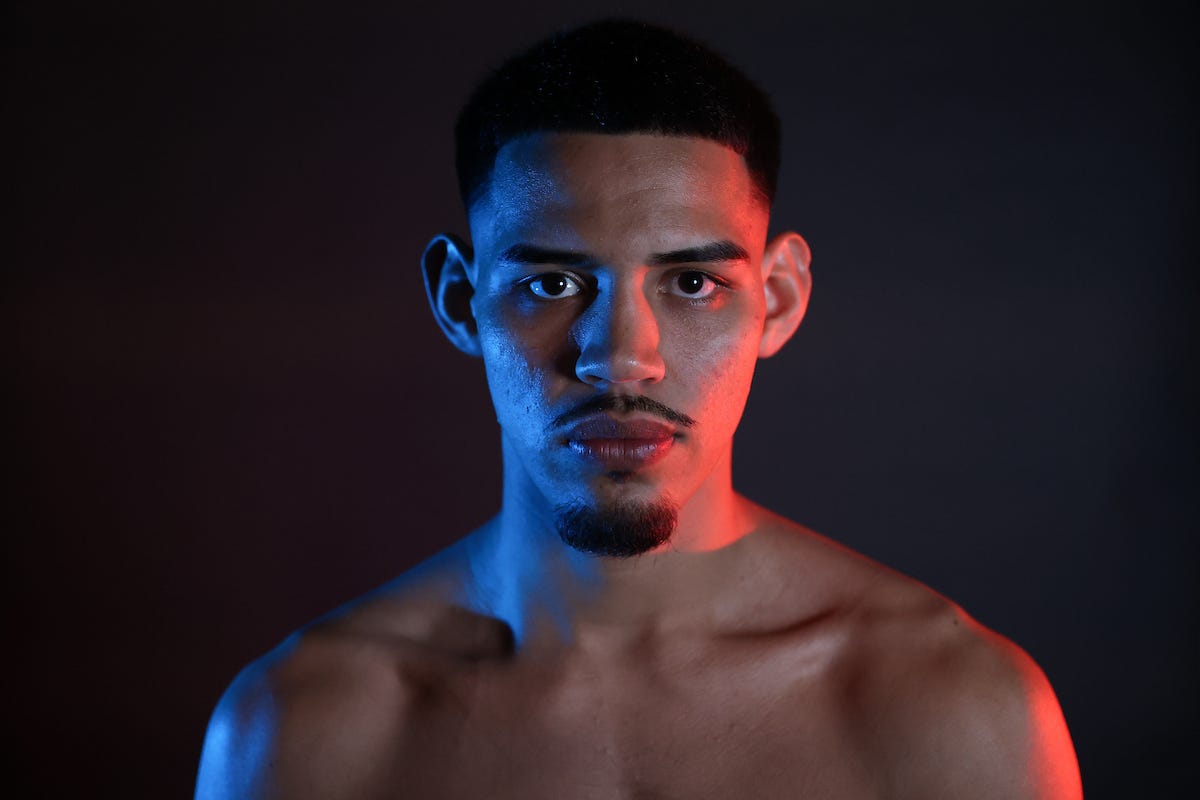
When Diego Pacheco’s parents left Mexico for America, they did so in pursuit of a better life for their family.
They struggled, sacrificed and worked tirelessly to give their son opportunities they never had. Now, at 25, Pacheco is on the brink of becoming a world champion, and he knows exactly who he wants to repay.
The unbeaten super-middleweight has come a long way from the streets of South Central LA. But he hasn’t forgotten where he came from, or what it took to get here.
Now 26-0 (19 KOs), he is the headline act at the War Grounds in Carson on Saturday night. He tops the Matchroom bill while sitting in a strong position in the world rankings: No. 2 with the WBO, No. 3 with the WBC, No. 5 with the WBA and No. 13 with the IBF. But he’s achieved a lot to make it this far. Plenty of his friends from his old neighbourhood have not made it.
“I was born and raised in South Central LA, and my first six years in this world, I lived in some apartments where it was horrible, man,” Pacheco tells me. “Like, I remember we had close family friends who lived there as well. And they were gangbangers. I remember a few times looking out my window and seeing guys shot, coming running into the apartment complex, bleeding out because they just got shot around the corner… people getting killed, murder scenes, all types of things that I saw in those apartment buildings that really, really honestly, made me realise what I was around. And I remember as a kid, I always wanted to be outside playing with the neighbourhood kids. And my mom [Maria], she was like, ‘No, I don’t want you out there.’ But then my mom would go to work and I had to go out there on my own.”
Diego was a big kid. By 13, he was 6ft tall, which meant he wound up in altercations with older teenagers, but soon enough he started hanging out with them.
“I didn’t want to back down, no matter how much older they were than me or bigger, whatever, it didn’t matter. I wasn’t going to back down and I was going to fight,” Pacheco added.
“And that’s where the fighter mentality came from for me, I would say. And transferring it to the boxing gym was something that was very easy for me. I remember as a young kid, everyone would tell my dad [Federico] that I was very gifted. You don’t see Mexican kids this tall who can move, who can fight, who have good rhythm, who have good athleticism.”
With that, Pacheco’s father tried to explain to his boy that he was different, while teaching him to remain humble and work hard to get the best out of his physical attributes. Now Diego tries to give back, but knows all too well the risks posed by the streets.
“I have friends that to this day, they call me from prison, and it’s just things that are unfortunate,” Pacheco said. “And there’s some friends that I wish were still here, and it’s just, it’s life, man. And we can’t sit there and just feel bad, we have to keep going.
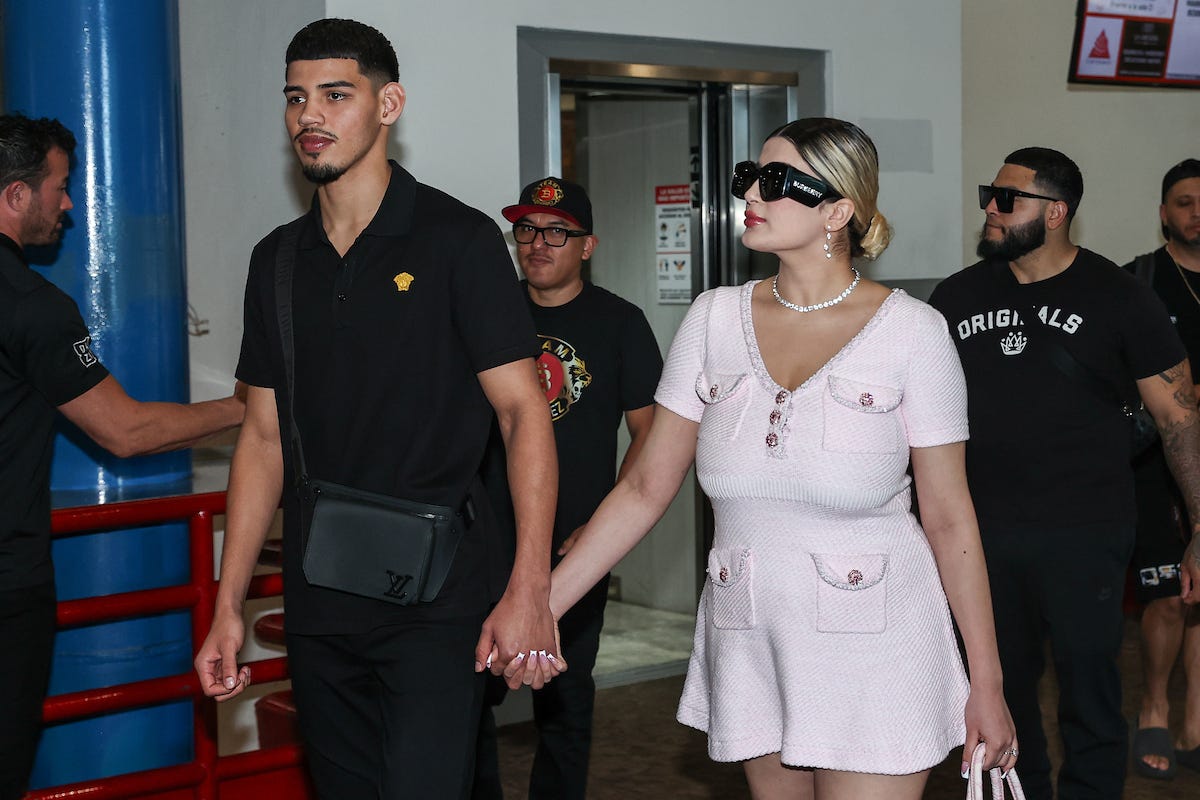
“I lost my brother two years ago [Manuel was born with a rare genetic condition that ultimately claimed his life] and that’s something that hurt me a lot. And it’s something that’s crazy because it helped me get even closer with my wife [Jo]. When I went through that, she was there for me. And then a couple of months later, her grandma passed away and I was there for her. There’s just things that happen in life that just bring us closer together to the people we love.”
**
As far up the ladder as Diego has climbed, he contends the altitude is no different. Fighting is in his blood, so regardless of the platform, the venue, the opponent or the stakes, he feels the same way.
“This is boxing. People ask me all the time, like, ‘How do you feel going into this fight?’ Things like that. And I just say, ‘Man, I’ve been doing this my whole life. I remember as a kid, being 12 years old, getting ready to go to national tournaments and knowing I was going to face the best, knowing I was going to go up against the toughest guys in the whole country.
“And I think my confidence always came from my dad. I remember as a kid, me being so tall at a young age, a lot of people in the gyms would think my dad would lie about my age.
“And I’ve always had a mature personality. All the kids my age, I wasn’t doing what they were doing. My dad always tried to keep me focused, tried to teach me the bigger picture of life. And I’ve always been the same way.”
It is Pacheco’s desire to make his father proud that has helped keep him on course.
“It all came from the way I was raised,” he said.
Despite coming from what he calls “a low-income home”, where his parents struggled to pay rent, seeing them discriminated against and fighting to give him a better life proved to be the inspiration for him to stay on the right path, and also to contribute to building a better life for the family.
When it came to boxing, his father gave him the self-belief and motivation he needed to fight older kids, bigger foes and more experienced opponents.
“I’ve been a winner since I was a kid. I remember the first national tournament, my dad had to raise funds for me to be able to get to the tournament,” Diego stated. “Because these things are expensive. And I remember him telling me like, ‘Okay, I’m about to go in debt for this. But you got to go over there and you got to win. Like, you never have to come back a loser.’
“I was like, ‘Oh shit, my dad didn’t just sacrifice all this money, he didn’t just go into debt for me to go over there and lose.’
“Our first day, I draw the guy who won the previous year, the national champion. So I’m like, ‘Oh shit, okay. I get through him, I’m good.’
“I went to work, I beat him. And then I became a national champion. That’s where it came from. My dad getting me to believe in myself.”
That belief comes through in Pacheco’s work today. He’s easy to talk to. As we converse over Zoom, there is no apparent time limit, nothing he won’t discuss, and he’s talkative. Too few make it this easy, but he has a story to tell and he wants people to know how much gratitude he feels he owes his parents.
As positive as his story might be, Pacheco has been something of a lightning rod for negativity online. There have been opportunities to fight Hamzah Sheeraz and Christian Mbilli, but Pacheco has walked a path that’s attracted derision in some quarters.
Asked how he thinks the fans feel about him, he pauses to consider a response.
“Ah, man, it’s hard, honestly,” he replied, half-smiling. “That’s a really hard question. I feel like a lot of boxing fans, a lot of boxing fans, I feel want to see me lose. I feel like they… I don’t know, man. I just feel like a lot of people think that I had it real sweet, that I had a great upbringing, that they’re like, ‘Yeah, you have two lovely parents. They raised you well.’ Some even say I went to private school, which is not true. But I don’t know why I come off as that. I guess because I just try to be a good guy to everyone. But growing up, I had to do a lot of things on my own. I had my parents who were there, but they had to work a lot.
“They lived cheque to cheque trying to make ends meet. Sometimes it was hard for them to be there for us… And I feel like boxing fans see me as a good fighter who was young, who hasn’t proved himself yet because I haven’t faced the top guys. But I’m on my way there. Come November 14th, at this level now, I feel every fight is dangerous, and Darius is a great fighter. That’s why he’s in there with me.”
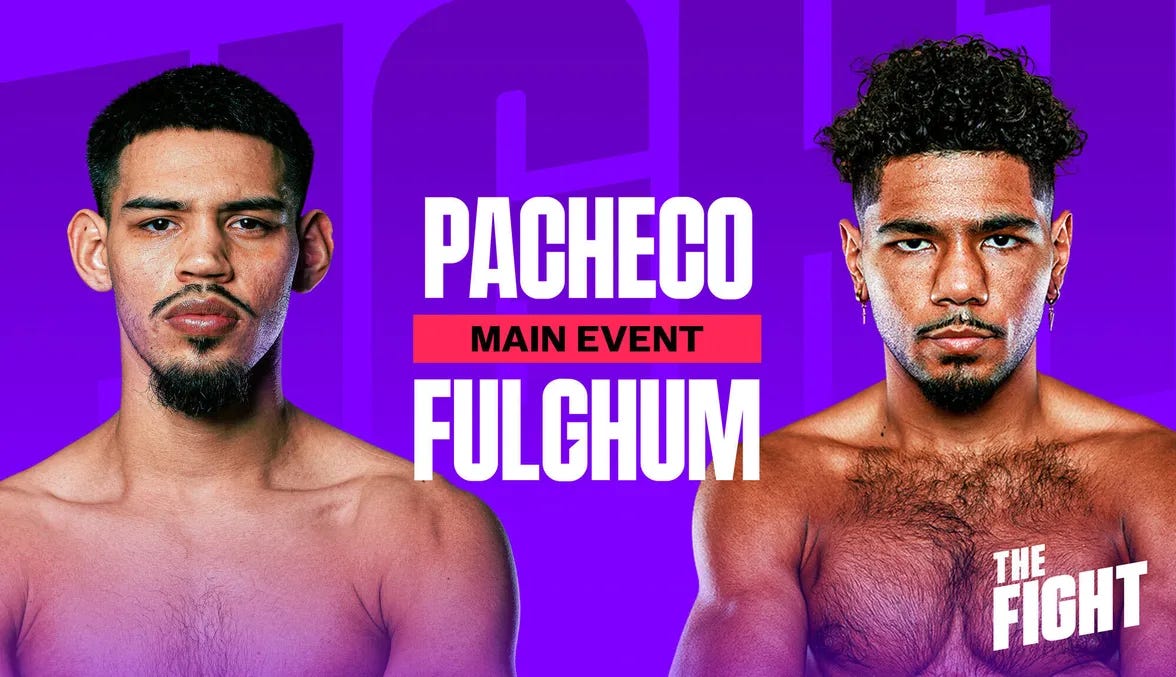
The goal, of course, extends far beyond 15-1-1 (13 KOs) Texan Darius Fulghum this weekend.
It is world titles, but Pacheco knows the sport intricately and there have been reasons behind his patience in reaching the top. There are reasons why he has not rushed things and why bouts against Mbilli and Sheeraz have not been the right ones at the right times.
“I feel like a couple of years ago, I did have some things that I wanted to prove to myself,” he said, referring to his desire to become a better fighter before reaching the top.
That included changing up the team, through both addition and subtraction.
“But now that’s all cleared up. I know what I can do. Just having a great trainer in your corner can change everything, and when you have someone who has been there before and he knows what he’s talking about, it’s just amazing. The things Buddy McGirt has been teaching me in the gym, and it goes beyond just the boxing stuff, the mental stuff, knowing how to handle certain situations and the way you react to certain things. I know I’m ready now. That’s all I’ll say.”
Diego Pacheco says Hall of Fame fighter and trainer Buddy McGirt was the missing link. After Fulghum, Pacheco wants the biggest fights possible. Those are his words. And he doesn’t mind admitting he needed “a lot” from Buddy, whether it was mentally, physically or tactically.
With Diego’s brother having passed away two years ago, there have been scars. Then, while living and training in Seattle – where he spent the best part of five years before moving back to LA – he was working with David Benavidez. But “The Monster” was often in Florida, and that meant former head coach Benavidez Snr was spending a lot of time in Miami, too.
Pacheco knew things would not work out like that. He grew frustrated, wasn’t happy, and felt he needed to return to Los Angeles to be closer to his parents, who were growing older.
“I had to build my team from scratch, because another thing being over there in Seattle, it’s like I was Team Benavidez, I wasn’t Team Pacheco,” he explained. “Every time people talked about me, every time I was brought up, it was Team Benavidez, Team Benavidez. So it was time for me to become my own man and really make my own team.”
But there was no rush, internally at least. The fans might not have known, but with Pacheco’s head all over the place, he wanted to know he was ready for an acid test, and that wouldn’t have been the case as long as he felt so unsettled.
He also knew there were things missing from his skill set, which is not a good thing to have in your mind going into world title fights.
“I’ve never had a trainer like Buddy McGirt, man,” he added. “I feel like in these six months that I’ve been with him, I’ve learned more with him than I’ve had my whole 15 years boxing with every boxing coach I’ve ever had. So in the back of my mind, like, and you hear the media, you see all these things, and I remember a couple of fights, I’d be confused and just like, I’d be dominating so good, winning every round. And then my coach would want me to go in there and knock him [the opponent] out. And it’s like, ‘I don’t know.’
“It was just something that was confusing me. It was a lot of things that I know I needed to change. And now I did. I have a new management team. I have a new training team. And now we’re here. I feel like sky’s the limit here.”
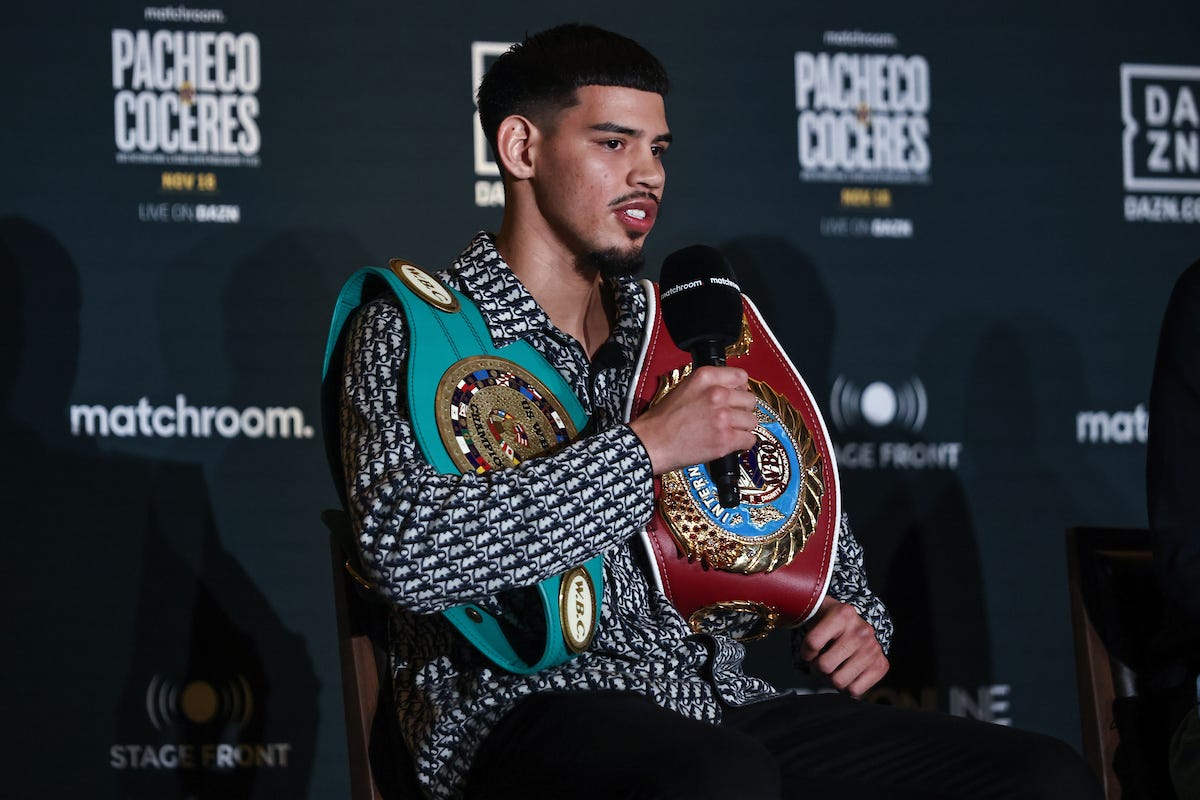
Fans are quick to use hard and heavy words in the fight game. Duck, quitter et al are part of a keyboard warrior’s go-to word sets. While Pacheco might be better served talking all things Fulghum, I ask him to explain why he did not fight Sheeraz or Mbilli. He says people will refuse to understand why they were not the right steps for him.
“I know that people just don’t understand that, people aren’t in the boxing business,” Pacheco said. “They’re looking from the outside, looking in, like they don’t know what’s really going on behind closed doors, man. And I’ll be honest, I’ve had to go through a lot of things where I’ve learned, when it comes to contracts, when it comes to negotiating, when it comes to building fights, there’s a lot of things that I’ve learned that I didn’t even know a couple of years ago and it’s all about having a good management team. I feel like that’s everything. The team that I have now, they want the best for me. They’re getting me everything that they possibly could. And I feel like my management before that was like the complete opposite, bro. Like they didn’t want me to get more money. They wanted me to actually take less and keep building to stay hungry, which was like, to me, ‘Bro, I got a family to feed. I got people that depend on me. Like you want me to take these harder fights and take less money. It doesn’t make any sense.’”
Pacheco said he was being smart and looking out for himself.
When it came to Mbilli, Pacheco would have been the B-side and gone to Canada, aged 23 and with the odds against him. His wife was pregnant with their daughter.
“I don’t mind going to Canada. Let’s do it. I don’t mind being a B-side, but just make sure I’m taken care of,” he said. “I’m not here to just say yes to everything.”
Mbilli went on to win the WBC title but lost it last month to Canelo in Saudi Arabia.
Pacheco hopes a win over Fulghum will lead to a Hamzah Sheeraz- or Lester Martinez-type fight in May, with Canelo or Jaime Munguia in September.
“That would do me. I think those two guys are the biggest names in boxing and will make the biggest fight,” he said. “So yeah, those are the guys I would want to fight.”
“I would love to get in there with Canelo. He’s a great fighter. I actually got to spar with him when I was 18 years old and it was great work. I know I gave him great work. And now that I’m 25, I know it’ll be a lot different. So, God willing, one day he gives me the opportunity, then we go to work and come for the win for sure.”
Now, Pacheco says he is the captain of his own ship and making the final calls on every move. He didn’t feel that was always the case.
And he’s in a position to reap the rewards of his parents’ choices, and to pay it back to them so they can see his future glory and benefit from it. He has also made his own tough choices, as his parents had to when they left Mexico all those years ago.
“This is honestly the dream, man. Like, and to just fuck it up because I have to say yes to someone?” Pacheco asked.
“Like, no. Who’s going to take care of my daughter? Who’s going to make sure my parents are good now that they’re older? Nobody. So it’s all up to me. And I have to make sure I play my cards right. I have to make sure I’m smart about every decision I make, even outside of boxing. This is something I deal with every day… I just try to be smart every day. Everything I do, I try to calculate it perfectly and make sure that everything falls into place.”
Paid subscribers make these in-depth interviews and original boxing features possible. Thank you for supporting independent boxing journalism and Total Boxing.