


Usually, when two fighters compete in what are dubbed semi-finals before eventually facing one another, it’s supposed to be a taste of what’s to come.
It’s a commercial, an advert. The boxers exhibit their wares and the masses are lured in.
They’ve seen fighter A destroy fighter C and fighter B decapitate fighter D, and A and B will now fight. Everyone is excited.
Yet what we were left with after Friday, as Tyson Fury apparently limped by a 46-year-old Mariusz Wach, and last night, when Anthony Joshua rose from two calamitous first-round knockdowns against Kristian Prenga, is anything but as appealing as it once was.
Should we eventually get to the point where Joshua, who turns 37 in October, and Fury, who is 38 next month, fight later this year, many will watch. But they will know it is not a clear indicator of who would have won in their primes, when it really mattered.
Like Lennox Lewis obliterating Mike Tyson, Floyd Mayweather negating Manny Pacquiao and Kell Brook besting Amir Khan, you will watch thinking what might have been.
We should have had an AJ-Fury trilogy by now. They should have made more in three fights than they will in one.
They could have done one in Old Trafford, one in Wembley and the decider on the moon (you get the point).
For the sake of going over old ground, again, about how this fight is too late, let’s look at what we might have in front of us if they box in 2026.
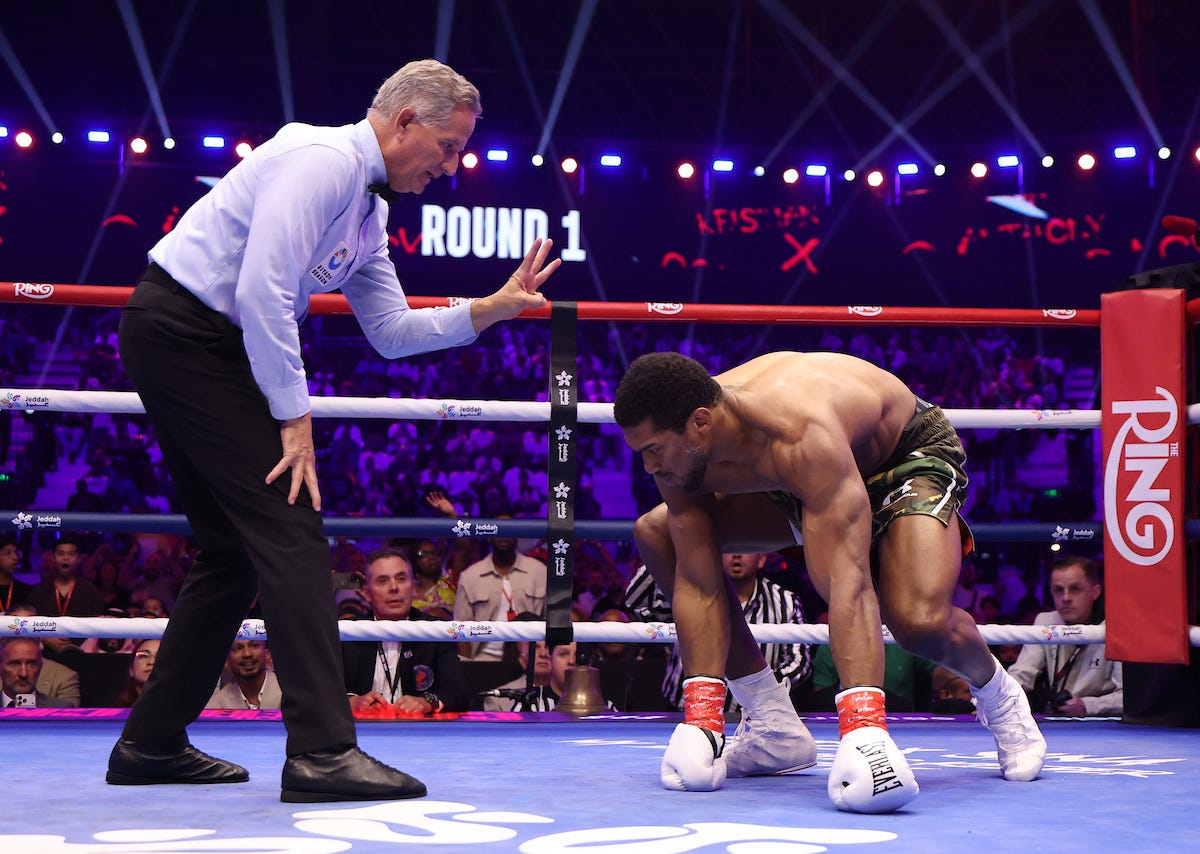
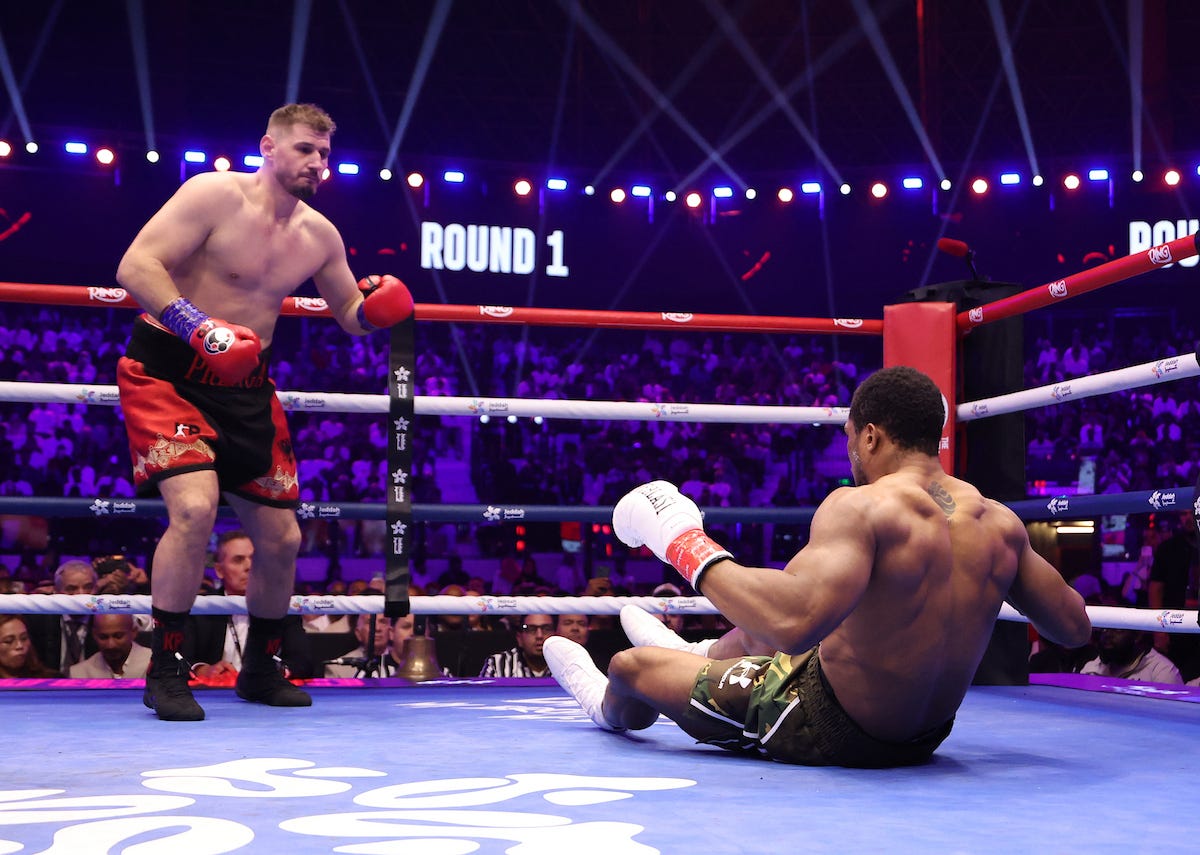
Joshua was expected to steamroll Prenga. Thirty seconds into the fight, he was on the canvas courtesy of a right uppercut. Joshua was all at sea. His legs had ‘gone.’ His brain was scrambled.
Prenga, at one point, seemed to slam him to the deck, and then he put a now weary and wary Joshua over again.
The Fury-Joshua fight, which we’d been told was on tap if they won their fights, looked more of a pipedream than ever before. Eddie Hearn was sweating bullets in the front row in Jeddah.
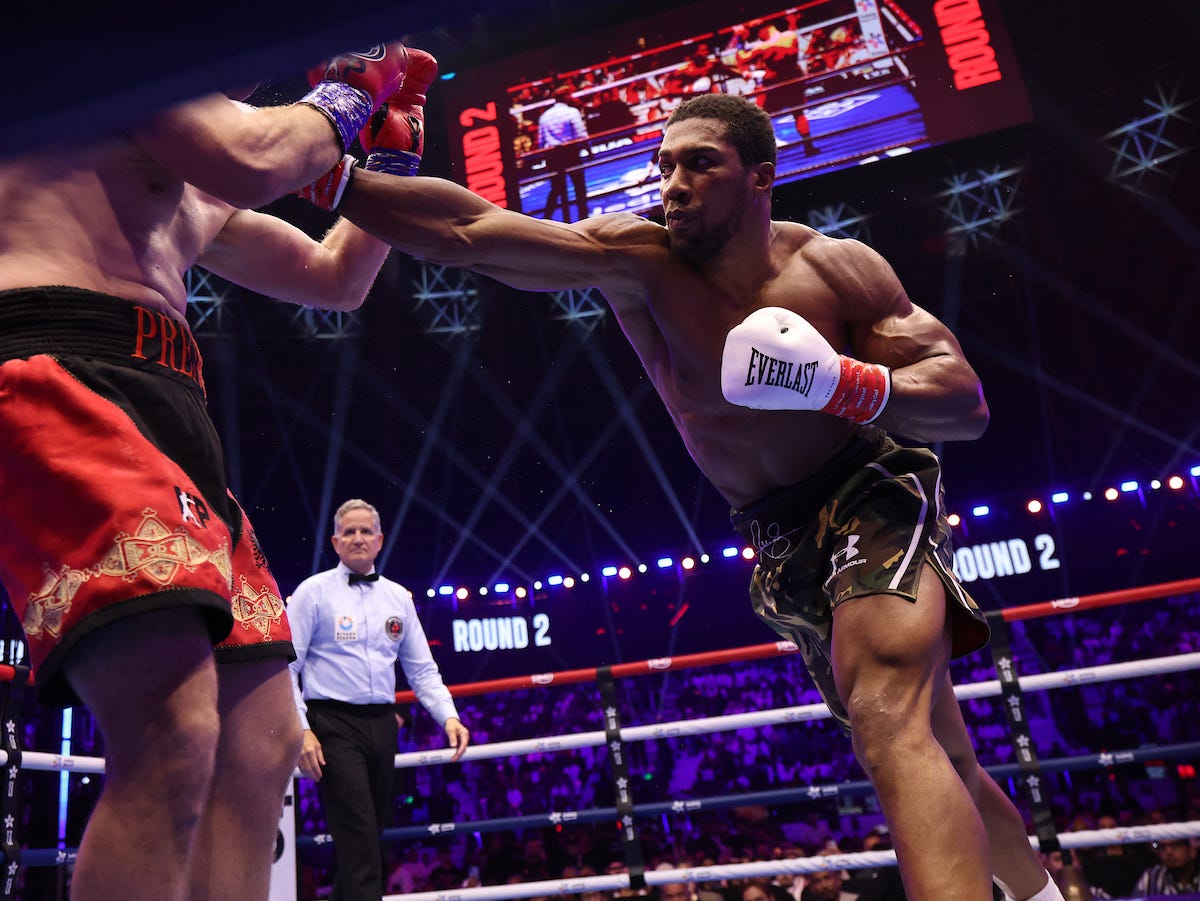
However, for those wondering whether AJ would emerge on his shaky legs, and for those carefully observing the creaking Olympic champion from 14 years ago, the focus fell on Prenga as the second round started.
He looked strangely reluctant in the second. Sure, Joshua created some space to work and put some distance between them, but Prenga had not been perturbed by those attempts earlier. He had swamped Joshua, hitting anything that moved.
His change in approach was curious.
As the second progressed, Prenga ate a little more leather here and there before he gulped down two huge rights. The third right put him down hard and awkwardly as he crashed onto his back in a heap on the ropes.
It was all over.
Now we won’t, I doubt, ever see the full fight from Thailand (it was likely filmed for a glossy montage on Fury’s next Netflix series), but footage has, of course, done the rounds. Fury guzzled on Wach’s right hand a couple of times, wrestled and jostled with the big Pole and even kissed him on the head during one exchange.
What he didn’t do was wipe out Wach, who in 2024 was obliterated in two by a then 9-0 Moses Itauma.
What Fury didn’t do was look anything close to his best. That is not just from the clips but from the reports from those there ringside.
What neither he nor Joshua did was look like either of the world’s leading heavyweights any longer.
What they did prove, as I suspected might have been the case a while back, is that when they do finally meet, the scales are probably as even, in terms of who wins, as they’ve ever been.
Not because they are both at their best. But because the question is now who has more left.
Mileage
Joshua can likely add another concussion from last night to what must comfortably be well into double figures.
He was rattled a few times in the amateurs, clouted by Klitschko, dropped, hurt and stopped by Andy Ruiz, and had the same thing happen against Daniel Dubois. Those 24 rounds with Oleksandr Usyk wouldn’t have done him many long-term favours, either.
He’s boxed 34 times as a professional. He had a hard and fast amateur career and has sparred through long, hard camps.
Fury had the three-fight rampage with Deontay Wilder. He was turned into a spinning top in the ninth round of the first Usyk fight, dropped heavily by Steve Cunningham and Neven Pajkic, and was all at sea against Francis Ngannou and, more concerning from a neurological standpoint, has been doing it since he was a child.
Legs and neurology
“It’s their legs,” former Boxing News editor Matt Christie, messaging me about the two British heavyweights, said last night. “Neither seem to be able to use them correctly anymore.”
It’s an old phrase, that a ‘shot’ fighter’s legs have gone, and I get it, but I’m convinced – after looking into this for years – it’s neurological.
Fury and AJ would have run their miles. They would have done their squats. Their leg lifts and running times might not be far off where they were at their best. They may even be right up there.
But the legs ‘go’ when the brain has taken too much.
Then it doesn’t matter what you’ve squatted, how many times you’ve leg-pressed or how many hills you’ve sprinted up. If you get hit in the head and you no longer have the same capacity to hold a shot, your legs show the observer what has happened; they don’t show how it happened.
The legs betraying them are a sign of a far greater problem.
