


It was Aesop who was quoted as saying: “Every truth has two sides; it is as well to look at both before we commit ourselves to either.”
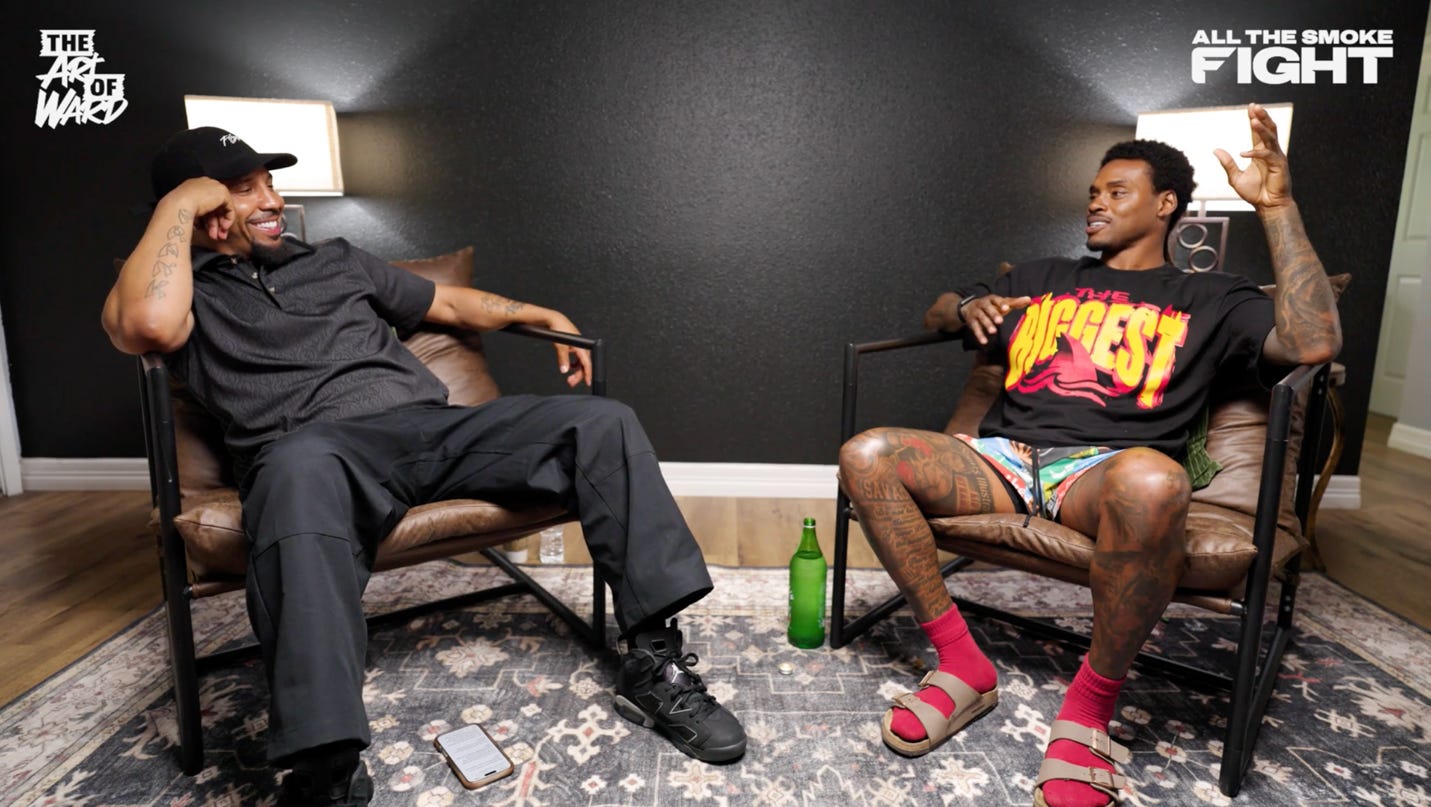
Errol Spence is known as “The Truth,” and he presented his version of it in a near two-hour Art of Ward sit-down with Andre Ward that was released this week via All the Smoke.
It was interesting, enlightening and entertaining.
Spence covered a multitude of topics, from his start in boxing to the infamous Floyd Mayweather spar, from the Terence Crawford camp and fight to why he still wants to box.
Ward was his usual poised self, and the two riffed through some 120 minutes.
In an era of clicks and hits, there is an art to long-form storytelling — something journalists and writers often hear is no longer done — where context becomes everything, and the journey is often enjoyed by the interviewer, the subject and the audience. They settle in for what is to come; they don’t brace themselves for a barrage of headlines and gotchas.
They are taken on a journey, with inevitable peaks and troughs.
The problem is, there are outlets out there waiting to clip 20 seconds from a two-hour interview and die on a hill by posting it to thousands of people.
It happens all the time, and there is little you can do to protect yourself from being “clipped.”
As subjects turn serious and you reach those high and low moments – and emotions come into play – a paragraph or two might be lifted and churned out on a social page without the backdrop of what came before or after. The context has gone, and it is rough being on the wrong side of it.
Both sides can’t help but feel like trust has been broken by a third party. Someone was overhearing their conversation, and the Chinese whispers and gossip then set the internet on fire.
For an interview, you set up hard questions; it’s a skill and a process. You tease the response out. The problem then is others don’t bother with the set-up, the execution or the follow-up. They grab a line, a moment, a headline, and send that one item out to an audience that wants to be outraged and have their knees jerked instantly in reaction.
Long-form is an art, but digesting it the right way is a different form of enjoyment. It’s not about instant gratification. It’s about the investment of time, the understanding and the payoff. You don’t get any of that with the clickbait stuff. That is not art. Sure, it works for those outlets, but it often harms meaningful relationships and sells quality work disastrously short.
I remember a long sit-down with Chris Eubank Jr that was very easy to set up at his home in Brighton a few years ago. We did around 90 minutes, and Eubank was great.
A day or so after the interview came out, someone who handles his PR sent me a piece that appeared in The Sun newspaper. Eubank and I had discussed his erratic teenage years, and that was pretty much all they took — nothing about who he had become, how he’d turned his life around – which was all discussed, or the pressures he’d felt as a teenager.
I felt I’d been thrown under a bus. And so did they. The only problem was they felt that, by giving me the time, that I’d contributed to the throwing.
Of course, it wasn’t like that, and while we’ve made amends, neither side has forgotten it.
But I saw the lines from the Spence interview go far and wide.
There’s clearly context behind the split with Derrick James, and clearly Spence has more to say. He didn’t quite bury his old coach, but he also admitted he was ill and injured through different camps, and that could explain certain things he discussed, like the lack of sparring for the Crawford fight. Either way, their relationship eventually went a legal route.
But there were many moments in the interview when you could have butchered the content.
I could see the headlines as they talked.
“Errol Spence told Bob Arum where to stick his $250,000,” without talking about how he felt once he’d met, got to know and understand Al Haymon. There’s context and balance to what actually happened.
As it turned out, Top Rank’s quarter-of-a-million-dollar signing bonus offer was not the be-all and end-all to Errol’s father, who preferred Haymon’s pitch about longevity, retirement, a good life after boxing, protecting fighters over time, and warning Errol Jr about the pitfalls of fast money and fame.
It was all interesting. None of the long-form needed to be bastardised.
There was no need to take “The Truth” and try to make your own fiction a reality.
Spence was raw. He was likeable. You wanted him to open up even more. You wanted him to operate in that safe space but, alas, he said more would follow once he retired. Even so, anyone watching that would be invested in his future and — unless they were Australian — rooting for him to succeed against Tim Tszyu in Sydney at the end of July when he returns from three years out of the ring.
That type of content is so much of what is needed now: building meaningful profiles and stories rather than generating clicks about Mount Rushmore this, blind-rank that, and winning fantasy knockout tournaments between fighters that those being asked about clearly know very little about or care about. Clicks and hits have come at the cost of getting to know the guys and girls the public are supposed to care about.
While Aesop’s pearl of wisdom started this reflection, it is George Orwell who will conclude it. “In a time of universal deceit,” he wrote, “telling the truth is a revolutionary act.”
And, to that extent, Errol Spence clearly had a lot to say. He also has a lot more left in the basement. “The Truth” will eventually set it free, but when he does, it would be helpful for him if it wasn’t broken down into little pieces and misrepresented.